

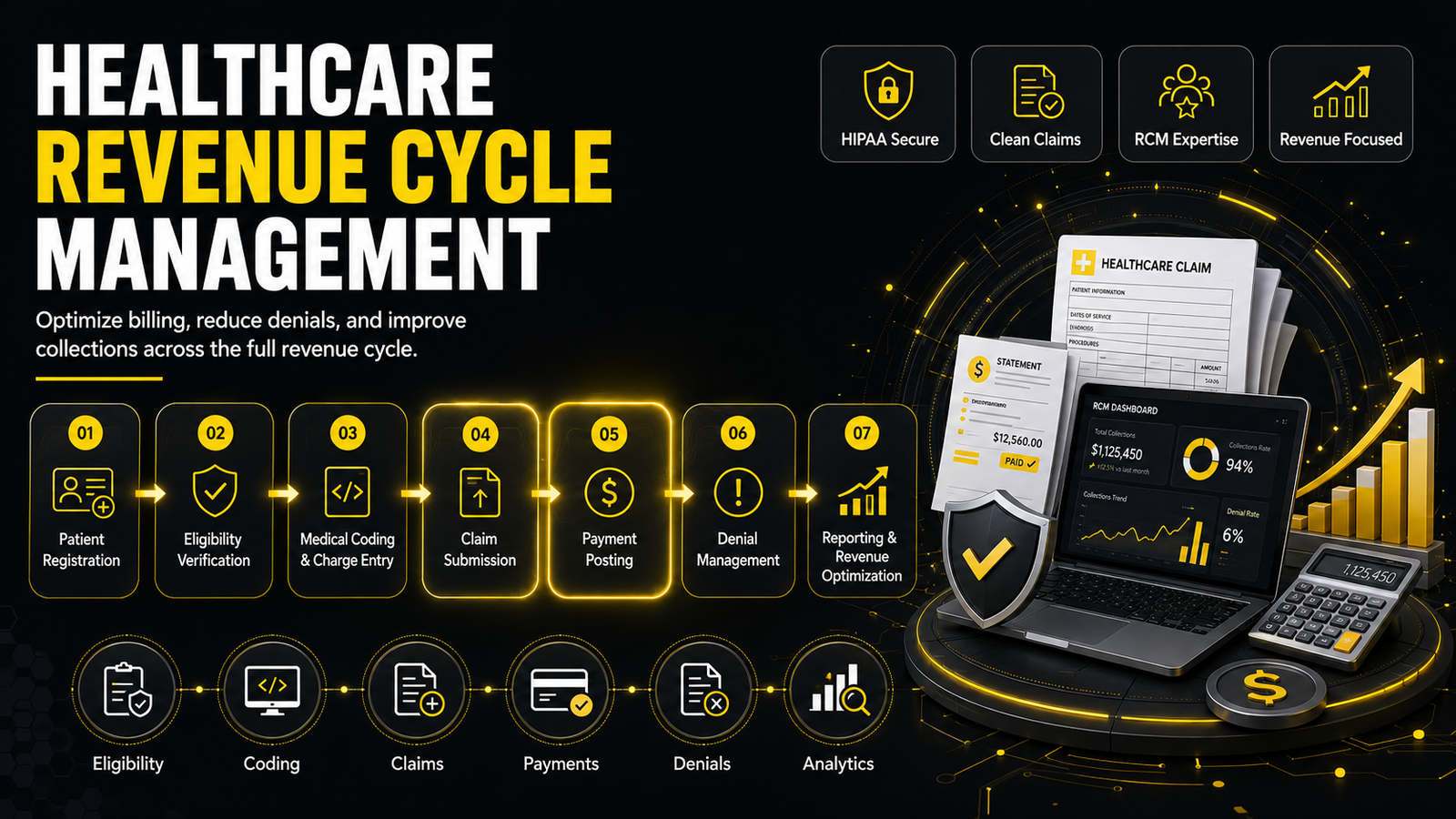

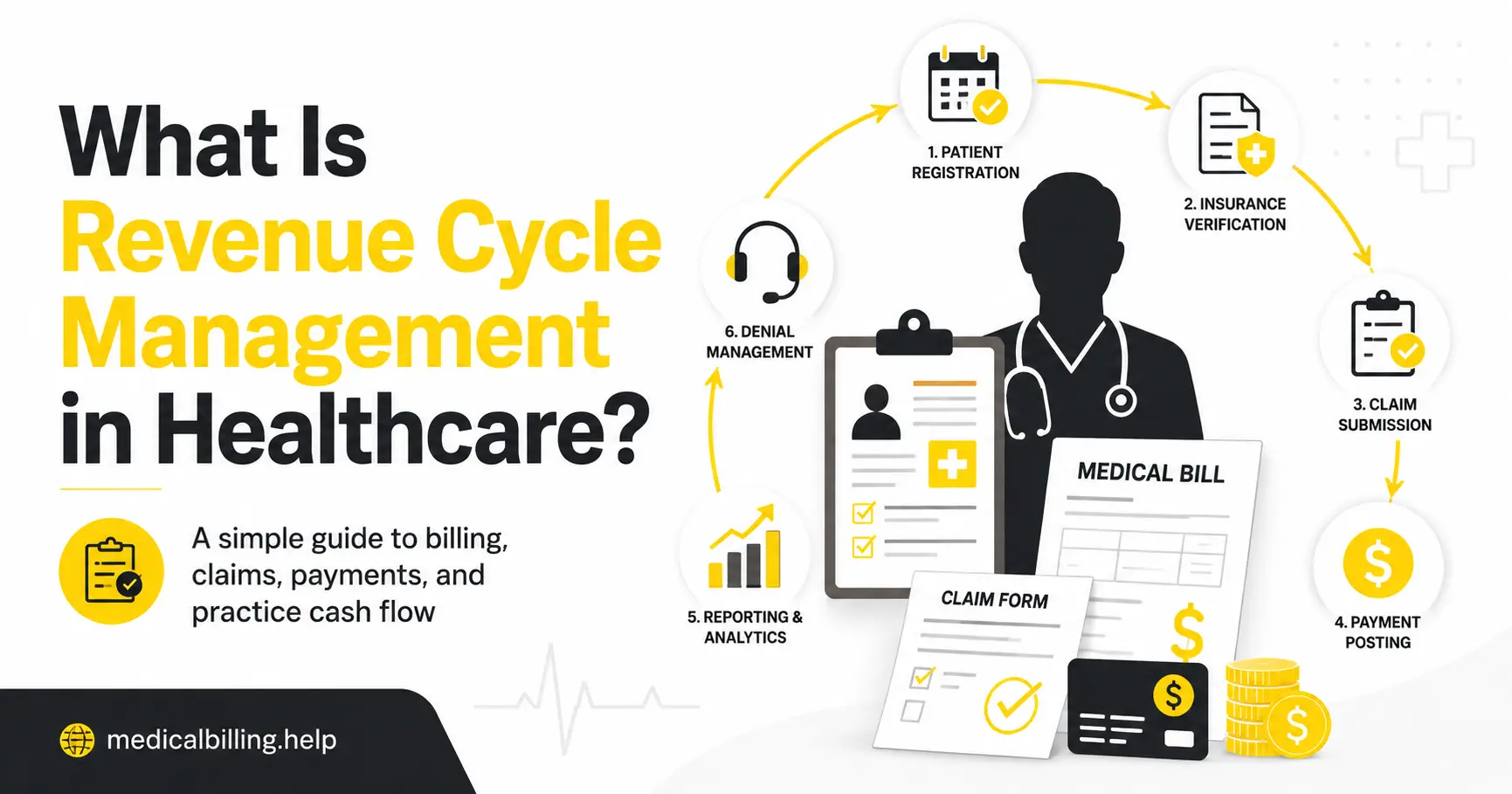
Revenue Cycle Management in Healthcare is the full money process of a medical practice. It starts when a patient books an appointment and ends when the practice receives full payment for the care given. Many people think it only means medical billing, but it covers much more than that. It includes patient details, insurance checks, coding, claim submission, payment posting, denial follow up, and patient billing.
A medical practice can give great care, but it still needs a strong payment process to stay open and serve patients. Doctors, clinics, and healthcare teams spend time helping people. They also need to pay staff, buy supplies, keep systems running, and manage daily work. This is why Revenue Cycle Management in Healthcare matters so much.
When the revenue cycle works well, claims go out clean, payments come in faster, and staff spend less time fixing billing problems. When it does not work well, claims get delayed, denials increase, and cash flow becomes hard to manage.
In simple words, revenue cycle management helps healthcare providers get paid correctly and on time.
Table of Contents
ToggleWhy Revenue Cycle Management Matters
Every medical practice depends on steady payments. A delay in payments can create stress for the whole team. Staff may spend hours checking claims, calling insurance companies, correcting errors, and sending patient bills again. These tasks take time away from patient support and daily office work.
Revenue Cycle Management in Healthcare helps fix this problem by creating a clear process. It helps the practice check patient information early, submit claims correctly, track payments, and follow up on unpaid claims. This makes the billing process easier for everyone.
A strong system also helps reduce mistakes. Small errors can cause big delays. A wrong date of birth, missing insurance number, incorrect code, or incomplete note can stop payment. Good revenue cycle management catches many of these issues before the claim goes out.
For a healthcare provider, this means fewer delays, fewer denials, and better control over practice income.
How the Revenue Cycle Starts
The revenue cycle begins before the patient even sees the provider. It starts at appointment scheduling. When a patient calls or books online, the front desk collects important details. These details may include the patient name, date of birth, address, phone number, insurance information, and reason for visit.
This first step may look simple, but it plays a big role in payment. If the patient information is wrong, the claim may fail later. That is why staff should check details carefully at the start.
The next step is insurance verification. The practice checks if the patient has active coverage. Staff also check benefits, copay, deductible, and any needed prior approval. This step helps avoid billing confusion after the visit.
When the front desk gets this part right, the rest of the process becomes much easier.
The Role of Insurance Verification
Insurance verification helps the practice know what the insurance plan will cover. It also helps the patient understand what they may need to pay. This step protects both the provider and the patient.
For example, a patient may think their insurance covers a service, but the plan may need prior approval. If the practice does not check this early, the claim may get denied. Then the patient may receive a bill they did not expect. This can create frustration for the patient and extra work for the staff.
Good insurance verification lowers that risk. It helps the team find problems before care begins. It also helps the practice collect the right copay at the time of service.
This is one of the first places where a strong healthcare revenue cycle can save time and prevent payment delays.
Patient Registration and Correct Details
Patient registration means collecting and saving patient details in the system. This includes personal details, insurance details, and contact details. Staff must enter this information correctly because the billing team uses it later for claims.
A small typing mistake can cause a claim rejection. For example, if the name on the claim does not match the name on the insurance card, the payer may reject the claim. If the policy number is wrong, the claim may not process. If the date of birth is incorrect, the payer may not match the patient record.
The best practice is simple. Staff should confirm details at each visit. Patients change insurance plans, phone numbers, addresses, and employers. A practice should not assume that old details are still correct.
Accurate patient registration builds a strong base for the whole revenue cycle.
Care Delivery and Documentation
After registration and insurance checks, the patient sees the provider. The provider gives care and documents the visit. Documentation means the provider writes clear notes about the patient problem, exam, treatment, and plan.
Good documentation supports billing. It shows what service took place and why it was needed. If the notes are missing or unclear, the coder may not choose the right code. The claim may also face denial if the payer asks for records.
Providers do not need to write long notes for every visit, but they do need to write clear notes. The notes should support the service billed. They should also match the codes used on the claim.
Clear documentation helps the billing team submit accurate claims. It also protects the practice if the payer reviews the claim later.
Medical Coding in the Revenue Cycle
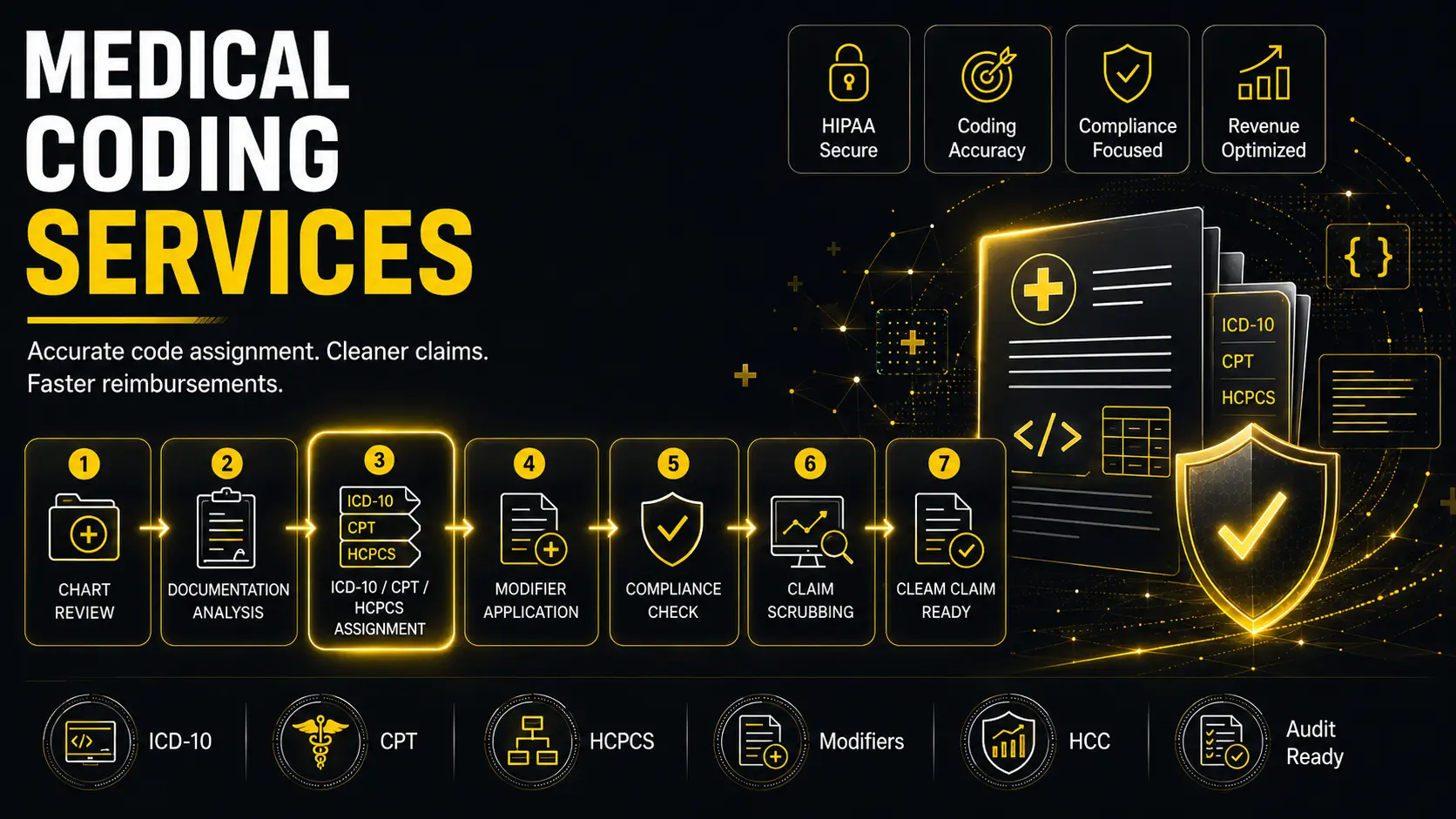
Medical coding turns the provider note into billing codes. These codes tell the insurance company what service was done and why it was needed. The most common code types include diagnosis codes and service codes.
This part must be accurate. If the code does not match the documentation, the payer may deny or underpay the claim. If the code does not support medical need, the claim may also face review.
The medical billing process depends on correct coding. A billing team can submit a claim quickly, but speed does not help if the codes are wrong. Good coding helps the claim move through the payer system with fewer problems.
Coding also affects practice income. If services are coded too low, the practice may lose money. If services are coded too high without support, the practice may face risk. The goal is simple. The code should match the care given and the note written.
Claim Submission
Claim submission means sending the bill to the insurance company. The claim includes patient details, provider details, insurance details, diagnosis codes, service codes, charges, and other needed information.
Before submission, the billing team should review the claim. Many practices use claim scrubbing tools to catch errors. A claim scrub checks for missing details, wrong formats, and common issues. This helps reduce rejected claims.
A clean claim has the right details and follows payer rules. Clean claims usually process faster. Claims with errors often come back and need more work.
The billing team should also submit claims on time. Insurance companies have filing limits. If the practice misses the deadline, the payer may deny payment. This can cause lost revenue that may be hard to recover.
Payment Posting
After the payer processes the claim, the practice receives payment information. This may come through an electronic remittance advice or another payment report. Payment posting means entering the payment, adjustment, and patient balance into the billing system.
This step must be accurate. If payments are posted wrong, reports become confusing. The practice may think a claim is unpaid when it has already been paid. Or it may miss a balance that still needs follow up.
Payment posting also helps the team find underpayments. Sometimes a payer pays less than expected. If the team reviews payments carefully, they can catch these issues and take action.
Good payment posting gives the practice a clear picture of money received, money adjusted, and money still owed.
Denial Management
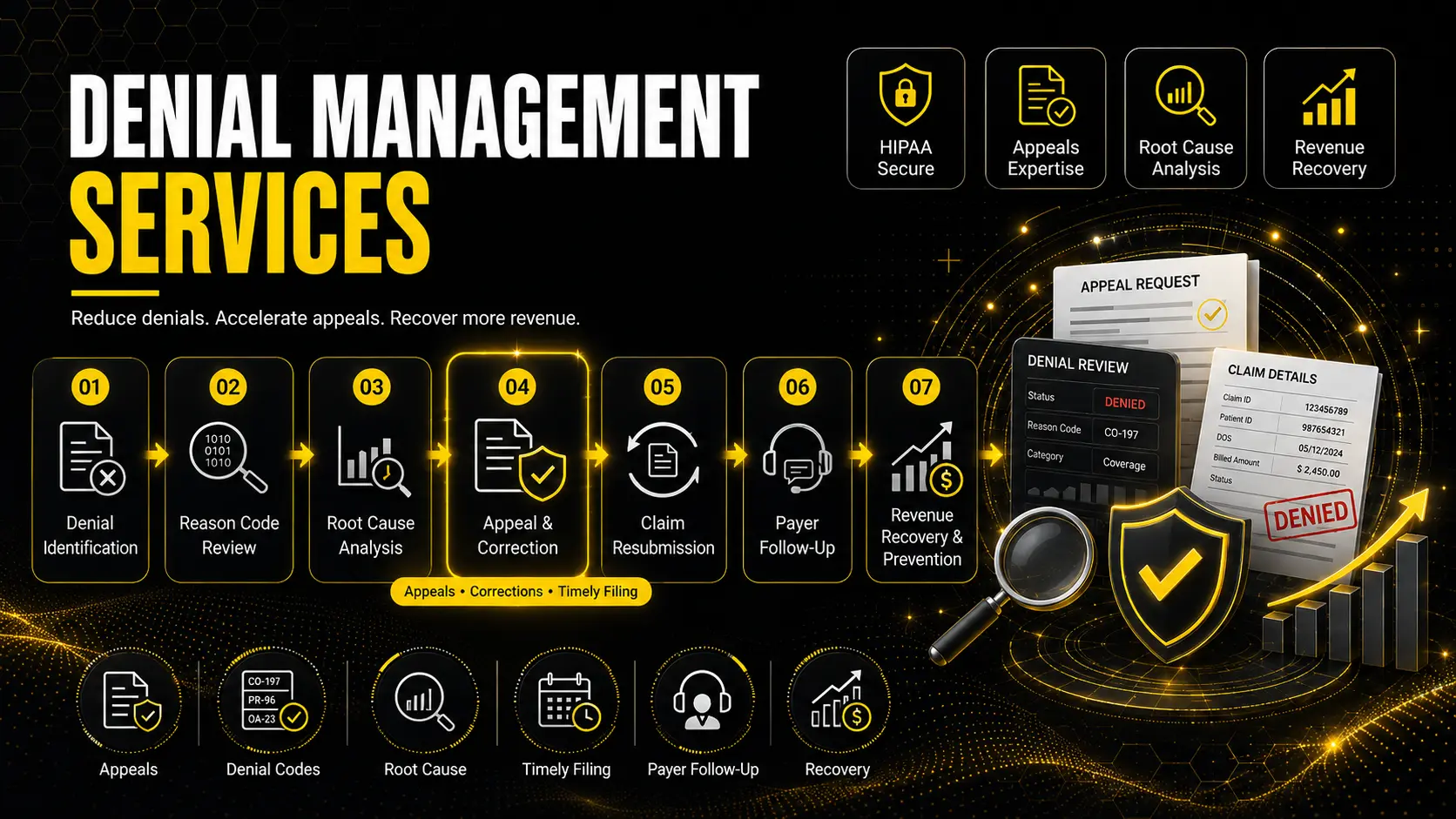
A denial happens when the insurance company refuses to pay a claim. Denials can happen for many reasons. The patient may not have active coverage. The claim may have wrong information. The payer may need more records. The service may need prior approval. The code may not match payer rules.
Claim denial management helps the practice review denied claims and fix them when possible. The team checks the denial reason, corrects the claim, sends an appeal, or contacts the payer for more details.
The goal is not only to fix denials after they happen. The bigger goal is to learn why denials happen and stop them from happening again. If many claims get denied for the same reason, the practice should fix the process that causes the issue.
For example, if many denials happen because of eligibility problems, the front desk may need a better insurance check process. If denials happen because of coding errors, the coding process may need review.
Good denial management services can recover money and improve future billing.
Patient Billing
Not every payment comes from insurance. Patients may owe copays, deductibles, coinsurance, or balances not covered by insurance. Patient billing starts after the payer processes the claim and shows what the patient owes.
Clear patient billing matters. Patients should understand what they owe and why. Confusing bills can lead to calls, complaints, and late payments.
A good patient billing process sends clear statements, offers easy payment options, and gives patients a way to ask questions. Staff should also explain financial responsibility before care when possible.
Patient payment collection works best when the practice communicates early and clearly. Patients are more likely to pay when they understand the bill and have simple ways to pay.
Accounts Receivable Follow Up
Accounts receivable means money owed to the practice. This can include unpaid insurance claims and unpaid patient balances. If the practice does not follow up, old balances can grow.
AR follow up is an important part of revenue cycle management. The billing team checks unpaid claims, contacts payers, reviews claim status, and takes needed action. They also track patient balances and send reminders when needed.
The older a claim gets, the harder it can be to collect. That is why regular follow up matters. A practice should not wait months to review unpaid claims.
Strong AR follow up helps improve cash flow. It also helps the practice find payer problems, missing details, or process gaps.
Common Revenue Cycle Problems
Many practices face the same billing problems again and again. Patient details may be wrong. Insurance may not be checked. Prior approval may be missing. Codes may not match the note. Claims may go out late. Denials may not get worked on time. Patient balances may sit too long.
These problems can hurt cash flow. They can also create stress for staff and patients. The good news is that many of these issues can be fixed with a better process.
A practice should review where delays happen. Are claims going out late? Are denials increasing? Are payments not posted on time? Are patients confused about bills? These questions help the team find weak spots.
Once the weak spot is clear, the practice can fix the process and track results.
How Revenue Cycle Management Helps Small Practices
Small practices often have limited staff. One person may handle calls, scheduling, insurance checks, billing questions, and follow ups. This can become too much, especially when claim volume grows.
Revenue Cycle Management in Healthcare helps small practices stay organized. It gives them a process for each step, from appointment scheduling to final payment. It also helps reduce repeated mistakes.
A strong revenue cycle does not mean the practice must become large or complex. It means the team should follow clear steps, review claims often, and take action before small issues become big problems.
For small practices, better billing can make a major difference. Faster payments can help with payroll, rent, supplies, and growth.
Why Outsourced RCM Can Help
Some practices manage billing in house. Others choose outsourced RCM support. Outsourcing means an outside billing team helps with claims, coding support, denials, payment posting, AR follow up, or other tasks.
This can help practices that do not have enough time or staff to manage billing well. It can also help when denials are high or payments are slow.
A good RCM partner does more than submit claims. They help find problems, track results, and improve the process. They also keep the practice updated with reports.
A practice should choose a partner that communicates clearly, understands payer rules, and works in a way that supports the provider team.
Key Reports to Review
Reports help a practice understand its revenue cycle. Without reports, the team may guess what is wrong. With reports, they can see real numbers.
A practice should review claims submitted, claims paid, claims denied, AR aging, patient balances, and collection trends. These reports show how well the billing process works.
For example, AR aging shows how long claims or balances have been unpaid. If many claims are older than 60 or 90 days, the practice needs stronger follow up. Denial reports show common reasons claims fail. Payment reports show what came in and what still needs attention.
Reports turn billing work into clear action.
How to Improve Revenue Cycle Management
A practice can improve revenue cycle management by starting with simple steps. Staff should confirm patient details at each visit. They should check insurance before the appointment. Providers should write clear notes. Coders should match codes to the record. Billers should review claims before submission. The team should work denials quickly and track unpaid balances often.
The practice should also train staff. Everyone plays a role in the revenue cycle. The front desk starts the process. Providers support it with documentation. Coders and billers move claims forward. The payment team posts and tracks money. Patient support staff answer billing questions.
When each person understands their role, the whole process improves.
Why Patient Experience Matters in RCM
Revenue cycle management is not only about claims and payments. It also affects the patient experience. Patients want clear answers about insurance, costs, and bills. When billing feels confusing, patients may lose trust.
A good process helps patients know what to expect. It gives them clear statements and easy ways to pay. It also helps staff answer questions faster.
Better patient communication can reduce billing calls and improve collections. It also shows that the practice respects the patient.
A smooth billing process supports both the practice and the patient.
The Role of Technology
Technology can help with revenue cycle management. Practice management systems, electronic health records, clearinghouses, and payment tools can all support billing work.
These tools can check claims, track denials, post payments, and create reports. They can also help patients pay online.
But technology alone does not fix everything. The team still needs good habits and clear steps. A tool can show an error, but staff must know how to fix it. A report can show a delay, but the team must take action.
The best results come when good systems and trained people work together.
For general information about health coverage and public health programs, providers can also review resources from the Centers for Medicare and Medicaid Services.
Key Takeaway
Revenue Cycle Management in Healthcare is the process that helps a medical practice get paid for the care it provides. It starts before the visit and continues until the final payment is collected.
A strong revenue cycle helps reduce errors, lower denials, improve payments, and support better cash flow. It also helps staff work with less stress and gives patients a clearer billing experience.
Every step matters. Patient details matter. Insurance checks matter. Provider notes matter. Coding matters. Claim submission matters. Payment posting matters. Denial follow up matters. Patient billing matters.
When a practice manages these steps well, it protects its income and builds a stronger business. This allows providers to spend more time where it matters most: caring for patients.