





A medical practice can stay busy and still wait too long for payment. The problem often sits inside 90 day accounts receivable, where unpaid insurance claims and patient balances lose value as time passes. When staff work these accounts without a clear order, they may spend hours on small or hopeless balances while urgent claims move closer to a deadline.
This guide explains which claims your team should work first and why. It gives practice leaders and billing teams a simple way to rank old claims by deadline, value, payment chance, and next action. It also shows how to clean the report, guide daily work, measure recovery, and prevent new claims from reaching the same age.
Table of Contents
ToggleWhy 90 Day Accounts Receivable Needs Fast Action
A growing balance in 90 day accounts receivable is more than an old list of unpaid claims. It is a clear sign that money has stopped moving through the practice. Staff may still be busy, patient visits may stay strong, and new claims may go out each day.
Claims become harder to collect as they age. Payer rules, filing limits, missing records, and staff changes can all reduce the chance of payment. The answer is not to call every payer in random order.
Start With a Clear Accounts Receivable Aging Report
An accounts receivable aging report groups unpaid balances by age. Most reports show current claims, then claims aged 31 to 60 days, 61 to 90 days, 91 to 120 days, and more than 120 days. The report should also show payer name, patient name, service date, billed amount, remaining balance, claim status, and last action date.
Do not judge the report by the total balance alone. A large total may include recent claims that are still moving through a normal payment cycle. The real concern is the amount that has crossed 90 days without a clear reason or next step. Review insurance and patient balances separately.
Do Not Work Every Old Claim the Same Way
Many billing teams open the oldest claim first and work down the list. That method feels fair, but it often wastes time. A small patient balance with no recent activity should not take priority over a large insurance claim that will reach its appeal limit tomorrow.
A better system gives each claim a simple priority level. Urgent claims have a close filing or appeal deadline. High value claims can make a real difference to cash flow. Easy claims need one quick fix, such as a missing claim number or corrected member ID. Complex claims need records, coding review, or payer contact.
First Priority: Claims Near a Filing or Appeal Limit
A deadline can turn a valid claim into a lost claim. That is why claims near a filing limit or appeal limit must come first. Staff should check the payer contract, payer portal, denial notice, and claim history. They should record the exact final date for action.
The team should send corrected claims, appeals, records, or proof of timely filing before the deadline. Keep a copy of every document and save the confirmation number. If the payer gives different information by phone, ask for a call reference number and note the agent name. The Centers for Medicare and Medicaid Services provides official guidance about Medicare claims and billing on its coding and billing page. Commercial payer rules may differ, so staff must confirm each payer requirement.
Second Priority: High Value Claims With a Good Payment Chance
Next, focus on claims with a large expected payment and a clear path to resolution. A single unpaid procedure may equal dozens of small balances. If the claim has active coverage, correct coding, strong notes, and no expired deadline, quick action may release a large amount of cash.
High value does not mean staff should chase every large balance without review. First confirm the allowed amount, contract terms, payment history, and claim status. A large charge may have a much smaller expected payment. Use the expected allowed amount when possible. Then ask what is blocking payment.
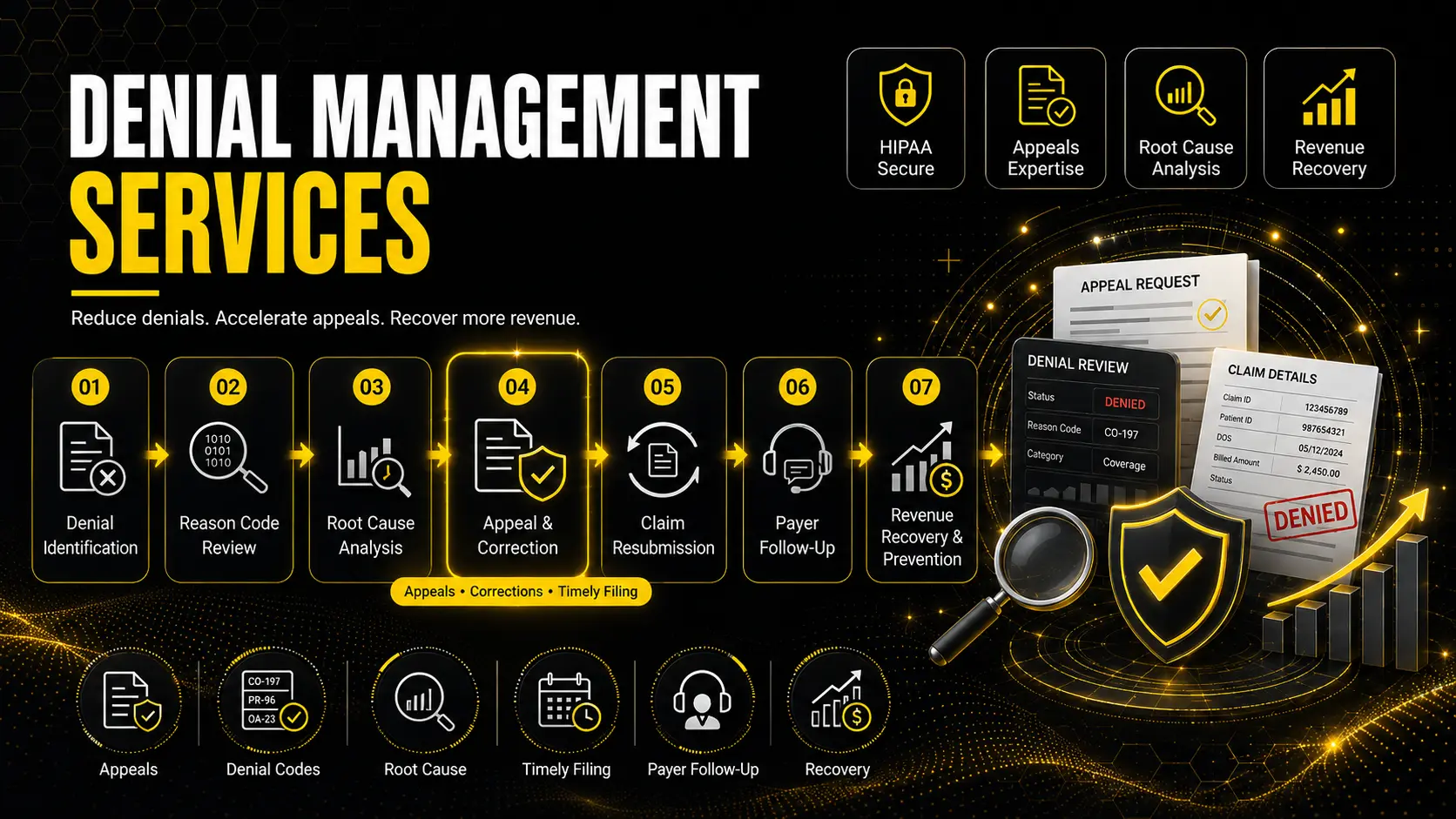
Use a Clear Denial Management Process for Correctable Claims
A denial does not always mean the payer will never pay. Many denials come from missing details, wrong patient data, coding issues, lack of approval, or missing medical records. The team should group denials by reason instead of treating each one as a new mystery. Common patterns reveal the step that needs repair.
A strong denial management process starts with the denial code and payer message. Staff then compare the claim with the patient record, coverage details, approval data, and payer rule. They should correct the true cause, not only the visible error.
Fourth Priority: Claims With No Payer Response
Some claims sit in the report with no payment, denial, or clear status. These silent claims need attention because they may never have reached the payer. Staff should check the clearinghouse report before calling. The report can show whether the claim was accepted, rejected, or stopped before payer review.
If the payer accepted the claim, use the payer portal to find its current status. Confirm the claim number, received date, processing stage, and expected completion date. If the payer cannot find the claim, send it again with proof of the first submission when needed. If the claim is pending, ask what information is missing.
Medical Billing Follow Up Needs a Clear Next Step
Good medical billing follow up does not end with a phone call. Each account note should explain what happened, what the payer needs, who owns the next task, and when that task is due. Clear notes stop staff from repeating the same work and help another team member continue without delay.
Use simple status labels that everyone understands. A claim may be waiting for payer review, waiting for medical records, waiting for coding review, ready for appeal, ready for correction, or ready for patient billing. Avoid unclear labels such as pending or working. Managers should review claims with many contacts but no progress.
Check Coverage and Patient Details Before More Work
Before staff spend time on a complex appeal, they should confirm the basic facts. Check the patient name, date of birth, member number, group number, service date, provider, place of service, and active coverage. One wrong detail can stop an otherwise clean claim.
Also check whether another insurance plan should pay first. Coordination of benefits issues often keep claims open for months. The patient may need to update coverage with the payer. Contact the patient with a clear request and a simple deadline. Explain what information is needed and why.
Review Coding and Medical Records Together
Old claims often need both billing and clinical review. A payer may question the code, modifier, service level, medical need, or link between the diagnosis and procedure. Billing staff should not guess at a code change. They should send the issue to a trained coder and provide the full payer message.
The coder should compare the claim with the signed note and current coding rules. If the note supports the billed service, the team can prepare a clear appeal. If the note does not support the claim, the practice may need a valid correction or an approved write off. Never change a code only to force payment.
Separate Old Medical Claims by Payer
Grouping old medical claims by payer can reveal patterns that are easy to miss in a mixed work list. One payer may delay a certain procedure. Another may reject a provider number. A third may request records before it pays a type of claim.
Create a short payer guide for common issues, contact details, portal steps, filing limits, and appeal rules. Update it when the payer changes a process. Managers should also compare denial rates and payment times across payers. If one payer creates a large share of the old balance, raise the problem through the payer contact or contract channel.
Handle Patient Balances With Care
Patient balances need a different approach from insurance claims. Before sending a statement, confirm that insurance finished processing the claim and that the patient amount matches the explanation of benefits. Check whether staff collected a payment at the visit and whether it was posted to the right account.
Use clear statements that show the service, insurance payment, adjustment, and amount due. Offer simple payment choices when practice policy allows them. Contact patients early and use respectful language. A confusing bill can delay payment and harm trust.
Know When to Appeal, Correct, Transfer, or Write Off
Every old claim needs a valid end point. An appeal fits when the payer made a wrong decision and the record supports payment. A corrected claim fits when the original claim had an error that the payer allows the practice to fix.
Do not let staff use write offs as a quick way to clean the report. Require a reason, approval level, and record of the steps taken. Review write offs by payer, provider, code, and cause each month. A repeated write off may point to a front desk problem, missing approval, weak notes, or a contract issue.
Build a Daily Work Order for the Team
A practical daily plan helps staff balance urgent work with steady progress. Start the day with claims that face a deadline. Move next to high value claims with a clear action. Then work correctable denials and claims with no payer response. Reserve time for patient replies, records, and coding questions so these tasks do not sit untouched.
Set a realistic number of accounts for each person based on claim difficulty. A complex hospital claim may take more time than several simple office claims. Measure resolved dollars and completed next steps, not call count alone. A high call count can hide poor results.
Measure Results That Show Real Progress
Managers need a small set of measures that show whether the plan works. Track the total balance over 90 days, the share of total receivables over 90 days, cash recovered from old claims, claims closed, appeal success, average days to payment, and write offs by cause. Review insurance and patient balances separately.
Compare results with the starting point and watch the trend each week. A lower balance is good, but make sure staff did not lower it through unsupported write offs. Also watch new claims entering the oldest group. If the team collects old claims while many new ones keep aging, the root problem remains.
Stop New Claims From Reaching 90 Days
The best old claim plan also prevents a new old claim problem. Review claims before submission for patient details, active coverage, approval, coding, provider status, and required records. Check clearinghouse rejections every day. Work payer requests as soon as they arrive. Contact patients early when the practice needs updated coverage information.
Create alerts before filing and appeal limits become urgent. Review unpaid claims at 30 days and again at 60 days. At those points, the team has more choices and more time. Study repeat denial causes and assign each cause to the department that can stop it.
When Outside Support Can Help
A practice may need help when the old balance keeps growing, staff cannot keep up, reporting is unclear, or payer follow up takes time away from current claims. Outside support can review the data, sort the work, recover valid payments, and show where the process breaks.
Ask any billing partner how it sets priorities, tracks deadlines, handles appeals, reports results, and protects patient data. The partner should explain the work in plain language and show progress by payer and claim cause. BillifyRCM provides revenue cycle management services for practices that want organized follow up and better control of unpaid claims. The right support should improve both recovery and prevention.
Create Clear Roles and Simple Team Rules
Old claim work moves faster when every person knows what they own. Decide who checks payer status, who gathers records, who reviews coding, who approves appeals, and who contacts patients. Set a time limit for each handoff. If a task waits several days for an answer, the claim should move to a manager for help.
Write the rules in plain language and train new staff with real examples. Clear roles reduce repeat work and stop claims from sitting between departments. They also make it easier to find the cause when progress slows.
The Most Important Step to Take Today
Start by cleaning the report and finding every claim near a deadline. Give each urgent claim an owner and a next action date. Then sort the remaining claims by expected payment, reason, and chance of recovery. This first review will show where the practice can recover money quickly and where it needs a wider process fix.
Keep the plan simple enough for the team to use every day. Consistent action, clear notes, and early checks will protect more revenue than a rushed cleanup at the end of the month.