

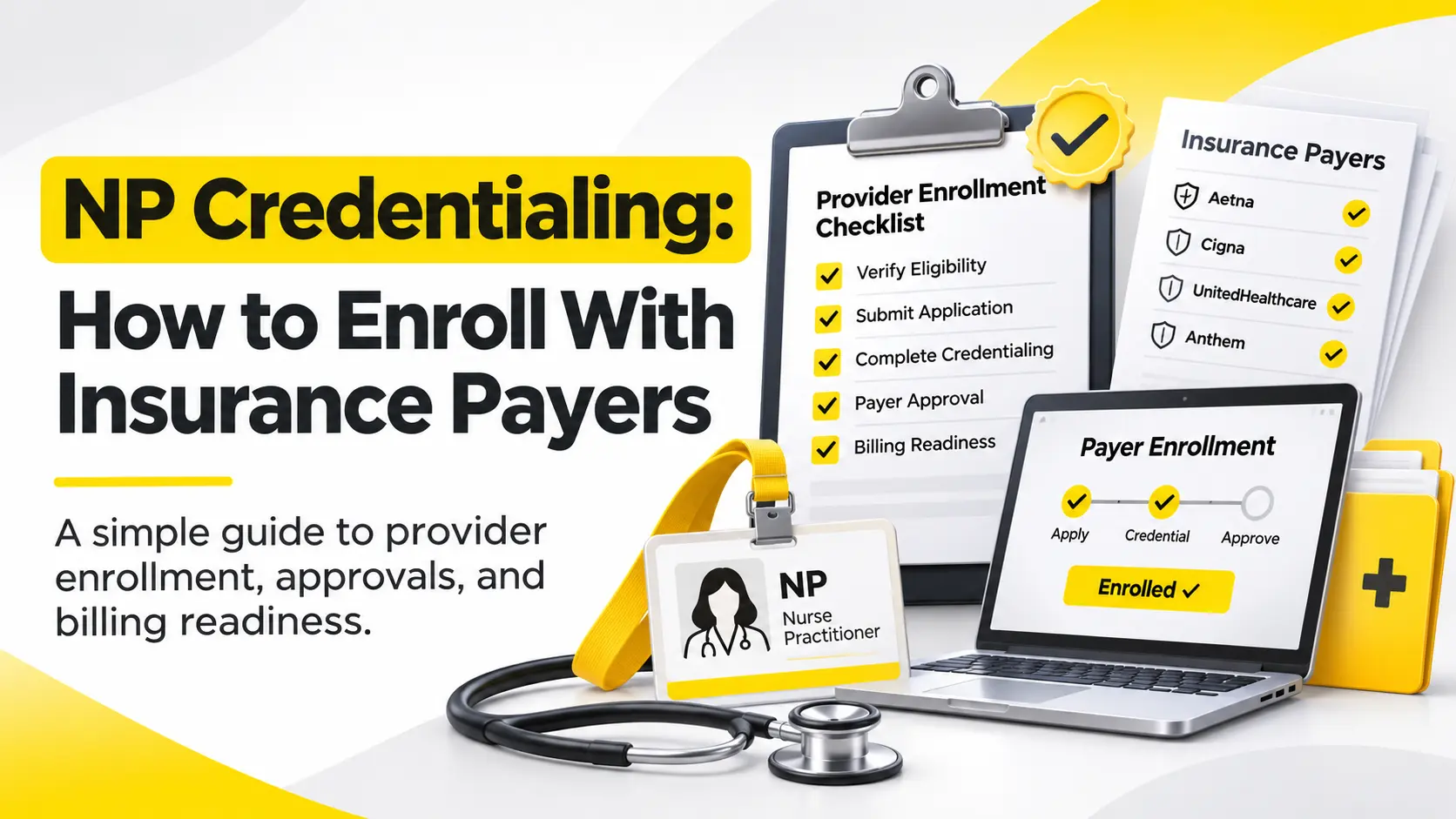
Nurse practitioner credentialing is the process insurance companies use to review a provider before allowing that provider to join a network or bill under an approved record. The payer checks education, license, certification, work history, professional insurance, identity, sanctions, and practice information.
Enrollment involves more than sending one application. A nurse practitioner may need a current NPI, CAQH profile, state license, controlled substance records, group connection, Medicare or Medicaid approval, and a signed payer contract. This guide explains each stage in simple language.
Table of Contents
ToggleWhat Is Nurse Practitioner Credentialing?
Nurse practitioner credentialing is the review a health plan completes before it accepts a nurse practitioner as an approved provider. The payer confirms that the provider has the education, license, certification, experience, and professional standing needed to deliver covered care.
Credentialing does not always mean that billing can start. The payer may complete credentialing first, then finish contracting and enrollment. The practice should wait for written approval and an effective date before sending claims as an in network provider.
Credentialing Is Different From Licensing and Certification
A state license gives a nurse practitioner legal authority to practice within state rules. National certification confirms knowledge in a population or specialty area. Insurance credentialing is a separate payer review that uses both records along with other information.
A provider can hold an active license and certification but still lack payer approval. New practices should plan for all three areas instead of treating one approval as permission to bill every insurance company.
How Insurance Payer Enrollment Works
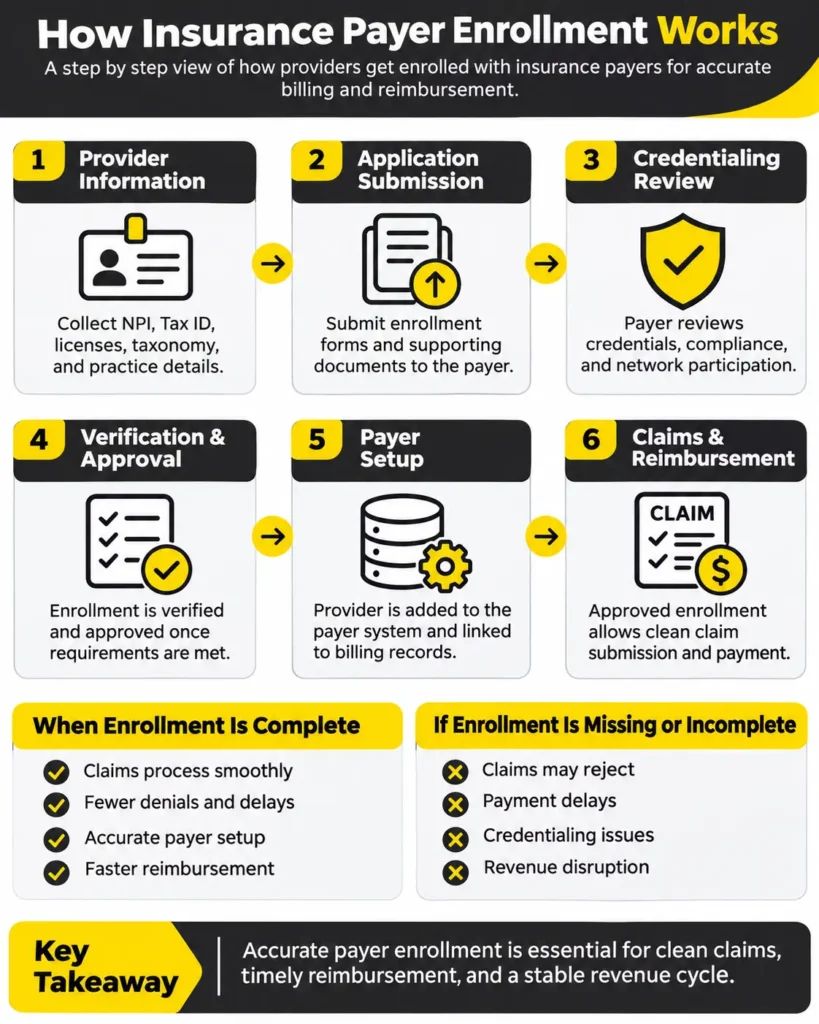
The process usually starts when the provider or practice asks a payer to open an application. The payer reviews whether its network is accepting new providers in the specialty and location. If it is open, the payer requests provider and practice details.
After submission, the payer verifies information from primary sources. It may ask questions or request missing records. Once the review is complete, the payer can approve the provider, offer a contract, create an enrollment record, and assign an effective date.
Documents to Prepare Before Applying
Prepare the legal name, date of birth, contact information, education, training, board certification, state license, work history, hospital affiliations, professional liability coverage, tax information, practice address, and ownership details before starting applications.
Names and dates should match across every record. A small difference in an address, middle name, license date, or employment history can create questions. Keep clear copies and record expiration dates in one secure place.
Get the Correct NPI and Tax Records
An individual nurse practitioner normally uses a Type 1 NPI. A practice organization may also have a Type 2 NPI. A group enrollment can require both numbers because one identifies the professional and the other identifies the billing entity.
The legal business name and tax identification information must match the payer application and federal records. Decide whether the provider will bill independently or through a group before completing enrollment forms.
CAQH Credentialing
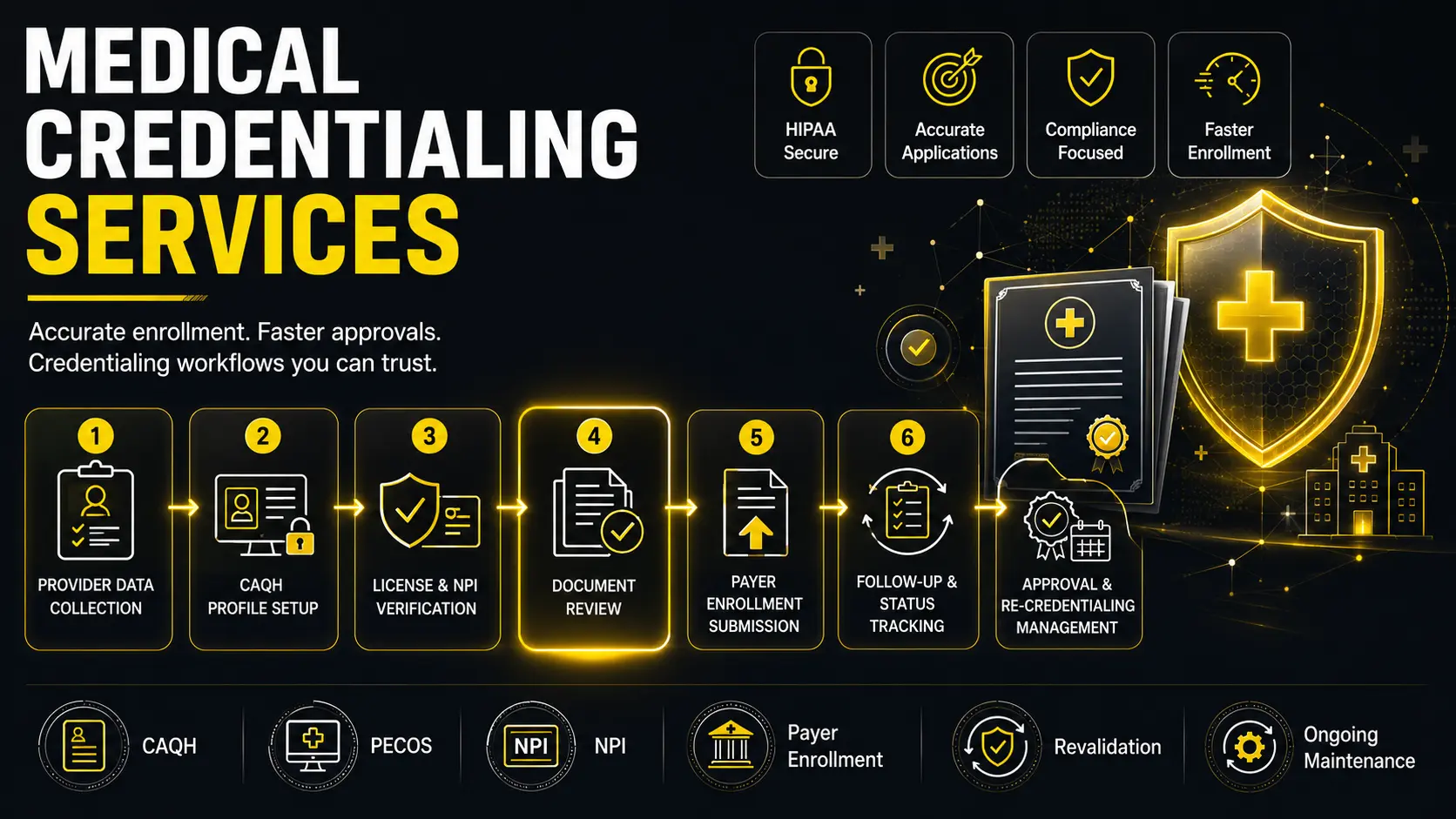
CAQH credentialing lets many health plans review provider information through one shared profile. A nurse practitioner enters education, licenses, work history, insurance, practice locations, and other details, then authorizes selected payers to access the record.
The official CAQH ProView system does not replace every payer application. Some insurers still require separate forms, contracts, ownership details, electronic payment enrollment, or portal steps.
Keep the CAQH Profile Accurate
The profile should show complete and current information. Review gaps in work history, expired documents, practice locations, contact details, and professional insurance before giving a payer access.
Providers must confirm the profile information when required. A payer may stop its review when the profile is expired or incomplete. Set reminders so the practice does not miss confirmation and renewal dates.
Choose Insurance Payers Carefully
Not every payer is a good fit for every practice. Review the local patient population, referral sources, employer plans, reimbursement terms, administrative work, and network demand before applying.
Contact each payer to confirm whether the network is open for nurse practitioners in the service area. Ask whether the provider can enroll independently, must join through a group, or needs a supervising or collaborating relationship under the payer rules.
Nurse Practitioner Payer Enrollment
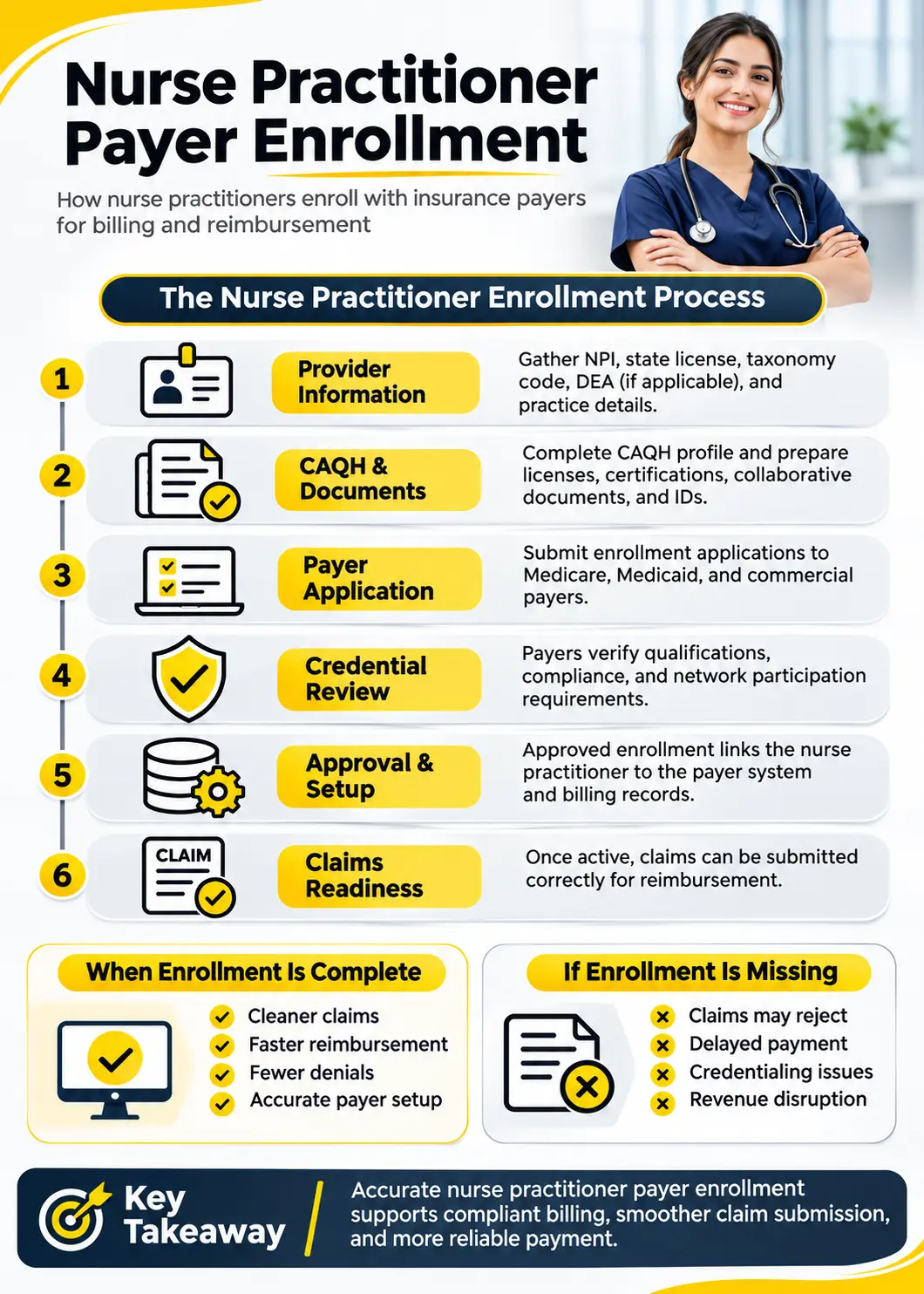
Nurse practitioner payer enrollment connects the approved professional with the health plan billing system. The payer records the NPI, specialty, locations, tax details, group relationship, network status, and payment information.
A credentialing approval without correct enrollment can still cause claim denials. Confirm that every location and billing arrangement appears correctly. A provider joining two groups may need a separate link for each organization.
Credentialing, Contracting, and Enrollment
Credentialing checks the provider qualifications. Contracting sets participation and payment terms. Enrollment builds the payer record that allows claims to process. The payer may handle these stages together or through different departments.
Track each stage separately. A signed contract does not always prove that the billing record is active, and a provider directory listing may not confirm every location or group connection.
Individual Enrollment and Group Enrollment
An independent nurse practitioner may enroll using an individual practice arrangement. A nurse practitioner who joins a medical group usually needs an approved connection to that organization and its billing NPI.
The payer may already credential the provider but still require a new group link. When a provider changes jobs, the old enrollment does not automatically move to the new practice.
Nurse Practitioner Insurance Credentialing
Nurse practitioner insurance credentialing can differ across commercial health plans. Each payer may request its own application, release, contract, portal registration, banking form, and supporting documents.
Use one tracking record for every payer. Record the application date, case number, contact method, missing items, review status, contract status, effective date, and portal access. Consistent follow up helps prevent an application from becoming inactive.
Medicare Nurse Practitioner Credentialing
Medicare nurse practitioner credentialing involves enrollment through the Medicare provider system and review by the responsible Medicare Administrative Contractor. The provider may enroll as an individual and reassign payment to an approved organization when the billing arrangement requires it.
The application must match the NPI, license, practice location, ownership, and billing structure. The practice should confirm the approval and effective date before billing Medicare under the new arrangement.
Medicaid and Managed Care Enrollment
Medicaid enrollment follows state program rules. A nurse practitioner may need approval from the state Medicaid program and separate enrollment with managed care plans that serve Medicaid patients.
The provider type, specialty, location, ownership, group link, and ordering or referring status can affect the application. Check the state and plan requirements instead of assuming that Medicare or commercial approval covers Medicaid.
How State Practice Rules Affect Enrollment
Nurse practitioner authority varies by state. Some states allow full practice, while others require a written relationship or another form of physician involvement. Payers may request documents that show compliance with the state rule.
A provider who serves patients in more than one state should review licensing and payer enrollment in every state. Telehealth does not remove the need to follow the rules that apply where the patient receives care.
Credentialing Timelines and Effective Dates
The time needed varies by payer, network, application quality, and provider history. Missing documents, verification questions, closed networks, and contract review can extend the process. Start well before the planned patient date whenever possible.
Never assume that the submission date is the billing date. Ask the payer for the approved effective date in writing. Also ask whether the payer allows any earlier effective date and what conditions apply.
Common Enrollment Delays
Common delays include an expired license, incomplete CAQH profile, missing work history, wrong address, unmatched tax record, old liability certificate, missing group link, and unanswered payer request.
Another common issue is poor follow up. Payers may close an application when the provider does not respond by a deadline. Check open cases regularly and keep proof of every submission and call.
Confirm Approval Before Billing
Written approval should identify the provider, network status, group, locations, specialty, and effective date. Review the payer portal and directory, but do not rely on a directory listing alone.
Send a small number of claims first and review payment closely. Confirm that the payer used the correct contract and provider record. Fix setup problems before they affect a large group of patients.
Maintain Enrollment After Approval
Nurse practitioner credentialing continues after the first approval. Payers may require recredentialing, profile confirmation, license renewal, insurance updates, address changes, and ownership notices.
BillifyRCM supports providers through organized medical credentialing services. A clear renewal calendar and one trusted provider record help protect network status, clean claims, and steady payment.