


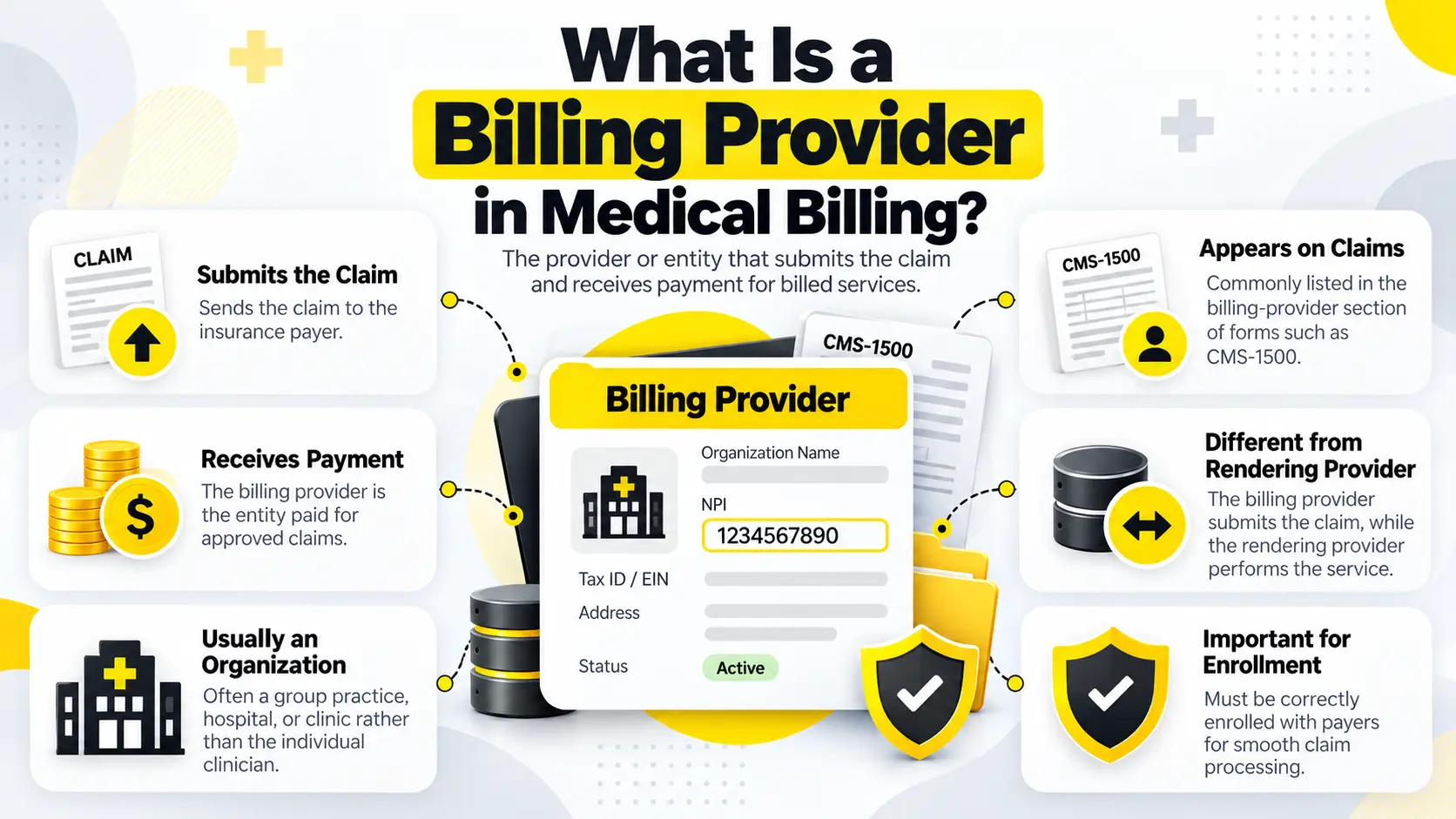
A billing provider in medical billing is the healthcare professional or organization that submits a claim and expects payment for covered services. The billing provider may be a doctor, group practice, clinic, hospital, laboratory, or another enrolled healthcare entity. Payers use this information to connect the claim with the correct contract, tax record, location, and payment account.
The billing provider does not always perform the service. An individual clinician may treat the patient while a group submits the claim. This guide explains the billing role, its connection with other provider roles, and the steps that help practices prevent claim errors and payment delays.
Table of Contents
ToggleWhat Is a Billing Provider in Medical Billing?
A billing provider in medical billing is the person or organization named as the party that submits the claim and receives payment. The payer checks this provider against enrollment, network, tax, address, banking, and contract records before it pays the claim.
In a group practice, the organization often fills this role while an individual clinician performs the service. A solo professional may both provide the care and submit the bill. The correct setup depends on the legal business, payer enrollment, and claim type.
Why the Billing Provider Matters
The billing record tells the payer which enrolled person or entity accepts responsibility for the claim. It guides payment, notices, contract rates, tax reporting, and claim history. It also helps the payer connect individual services with the approved practice.
A claim can contain accurate codes and patient details but still fail when the billing record does not match enrollment. Correct names, numbers, addresses, and dates help the payer find one clear record and process the claim with fewer questions.
Who Is the Billing Provider?
The answer to who is the billing provider depends on who submits the claim under an active payer record. It can be an individual professional or an organization such as a group, clinic, facility, laboratory, or supplier.
Staff should not choose a provider only because the name appears on a patient chart. They must check the business arrangement and payer enrollment. The selected person or organization should match the party that owns the claim and receives the payment.
Individual Billing Provider
A solo doctor or other qualified professional may bill as an individual. The person provides the care, sends the claim under an individual enrollment record, and receives payment through the approved business setup.
The professional must keep the legal name, address, tax details, license, specialty, and payer information current. A change in business structure can require a new enrollment review even when the individual NPI stays the same.
Organization Billing Provider
An organization may bill for services performed by professionals who work with the practice. Common examples include medical groups, clinics, hospitals, therapy practices, and laboratories. The organization normally uses its own provider and tax records.
The payer must recognize the connection between the organization and each clinician. If that link is missing or inactive, the claim may reject even when the organization and clinician both have valid identification numbers.
Billing Provider vs Rendering Provider
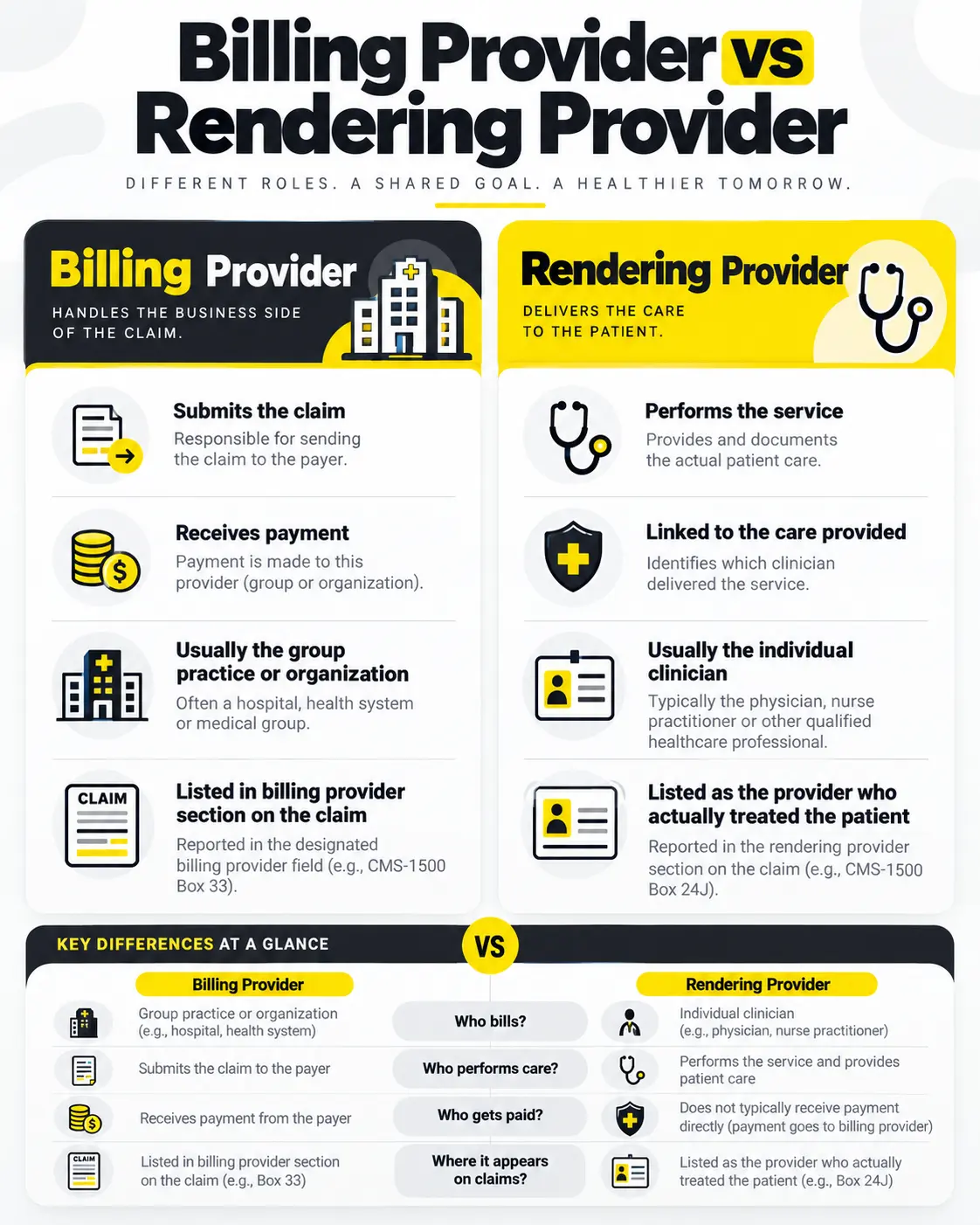
The billing provider vs rendering provider difference comes down to responsibility. The billing provider submits the claim and expects payment. The rendering provider is the individual who performed or directly supervised the service shown on the claim.
These roles can belong to the same person in a solo practice. In a group, the organization often bills while a clinician renders the care. Staff must report both roles correctly so the payer can match the service with the professional and the payment record.
When Both Provider Roles Are the Same
A solo professional can serve in both roles when that person performs the service and bills under the same enrolled record. The claim may use the same individual NPI in the fields required by the payer.
Staff should still follow the payer format. Some billing systems fill repeated fields automatically, while others need a separate selection. A test claim can confirm that the software sends the correct information.
When the Provider Roles Are Different
The roles differ when a group or facility submits a claim for care delivered by an individual professional. The claim identifies the organization for billing and the clinician for the service.
Payers usually require the clinician to have an approved relationship with the organization. Credentialing staff should confirm that relationship and its effective date before billing begins. A valid NPI alone does not prove that the link is active.
Rendering NPI vs Billing NPI
The rendering npi vs billing npi comparison often involves two NPI types. The rendering professional usually uses a Type 1 NPI that identifies an individual. A billing organization usually uses a Type 2 NPI that identifies an entity.
A solo professional may use a Type 1 NPI for both roles. A group claim often carries both numbers. Billing software must place each one in the correct claim field instead of using the organization number for every provider role.
How Tax Information Connects With Billing
The billing record connects with the legal name and tax identification information used for payment reporting. The payer compares these details with enrollment and contract files. A mismatch can stop payment or send the claim to manual review.
Practices should review tax information after an ownership, name, or business structure change. Updating only the billing software does not update payer records. The enrollment team should complete each required change and confirm when it becomes active.
Where Billing Provider Information Appears
A professional claim includes a section for the person or organization responsible for billing. Electronic claims send the same type of information through set loops and segments. The exact fields depend on the claim format and payer instructions.
The record often includes the legal name, address, NPI, and other identifiers required by the payer. Staff should review the final claim view because a correct practice profile can still map to the wrong electronic field.
Billing Information on the CMS 1500 Claim
The CMS 1500 form separates the billing provider section from information about the professional who performed the service. This design allows a group to bill while naming an individual clinician as the rendering professional.
The Centers for Medicare and Medicaid Services explains provider duties on its official billing responsibilities page. Practices should also follow the instructions of each payer because required claim details can vary.
Types of Providers in Medical Billing
The types of providers in medical billing include billing, rendering, referring, ordering, supervising, attending, and servicing roles. Each label tells the payer how a person or organization relates to the care or claim.
Not every claim needs every role. The service, setting, and payer rules decide what information belongs on the claim. Staff should identify each role from the patient record instead of copying one provider into every field.
Billing Provider and Referring Provider
A referring provider directs a patient to another professional or service. The billing provider submits the claim and receives payment. One person may fill both roles in some cases, but the roles describe different actions.
When a referral is required, the payer may check the referring professional against enrollment and service rules. A missing referral number can delay a claim even when the billing record is correct.
How Enrollment Affects Billing Claims
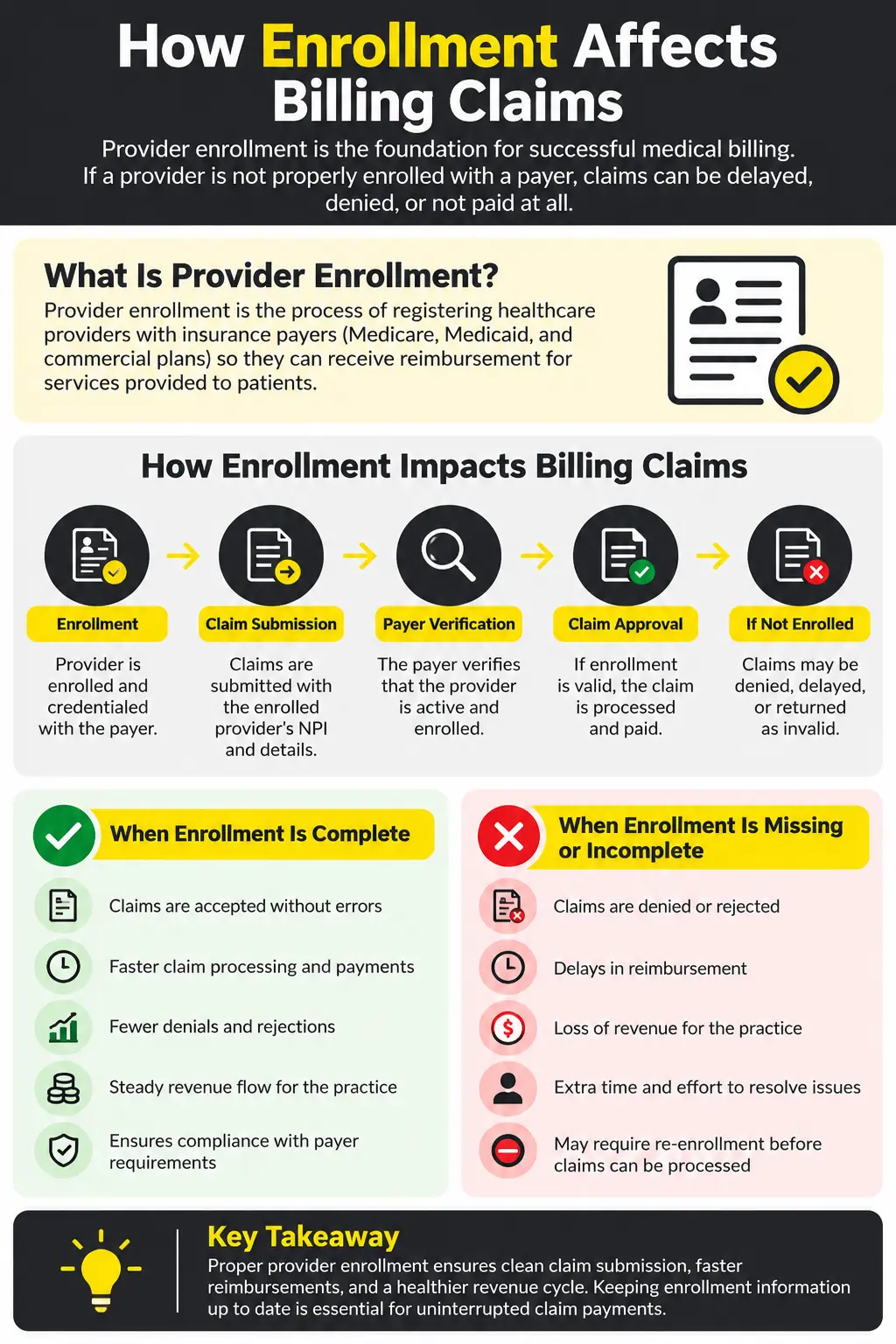
The payer must have an active record for the person or organization that bills. Enrollment can include the NPI, tax information, locations, specialties, ownership, banking details, and links to individual clinicians.
A provider may have an NPI but no active contract or enrollment with a payer. Claims submitted before the approved effective date can reject or process outside the network. Billing staff should confirm approval before sending claims.
Common Billing Provider Errors
Common errors include using an individual NPI instead of the group NPI, selecting the wrong organization, sending an old address, or billing under an inactive location. Claims can also fail when tax information does not match the payer file.
Another problem occurs when staff copy a provider profile without reviewing it. One setup error can then affect many claims. Practices should test new profiles and review claim data after any enrollment or business change.
How to Correct a Billing Provider Error
Start with the rejection or denial message. Compare the submitted claim with the payer portal, contract, enrollment approval, tax record, and billing system profile. Find the source of the mismatch before changing the claim.
If the claim contains wrong data, follow the payer process for correction. If the enrollment record is wrong, update that record first and confirm its effective date. Sending the same claim again without fixing the cause wastes time.
How Practices Can Prevent Provider Mismatches
Keep one trusted record for every individual and organization. Include legal names, NPIs, tax details, addresses, locations, payer status, group links, and effective dates. Give one team member clear responsibility for updates.
Review a sample claim when a practice adds a provider, opens a location, changes ownership, or receives a new payer approval. Compare the claim with the enrollment file. A short review can prevent weeks of denials and payment delays.
Why Accurate Billing Data Supports Clean Claims
Accurate billing information helps the payer connect the claim with the right contract, tax record, location, professional, and payment account. It lowers avoidable rejections and makes follow up easier when a claim needs review.
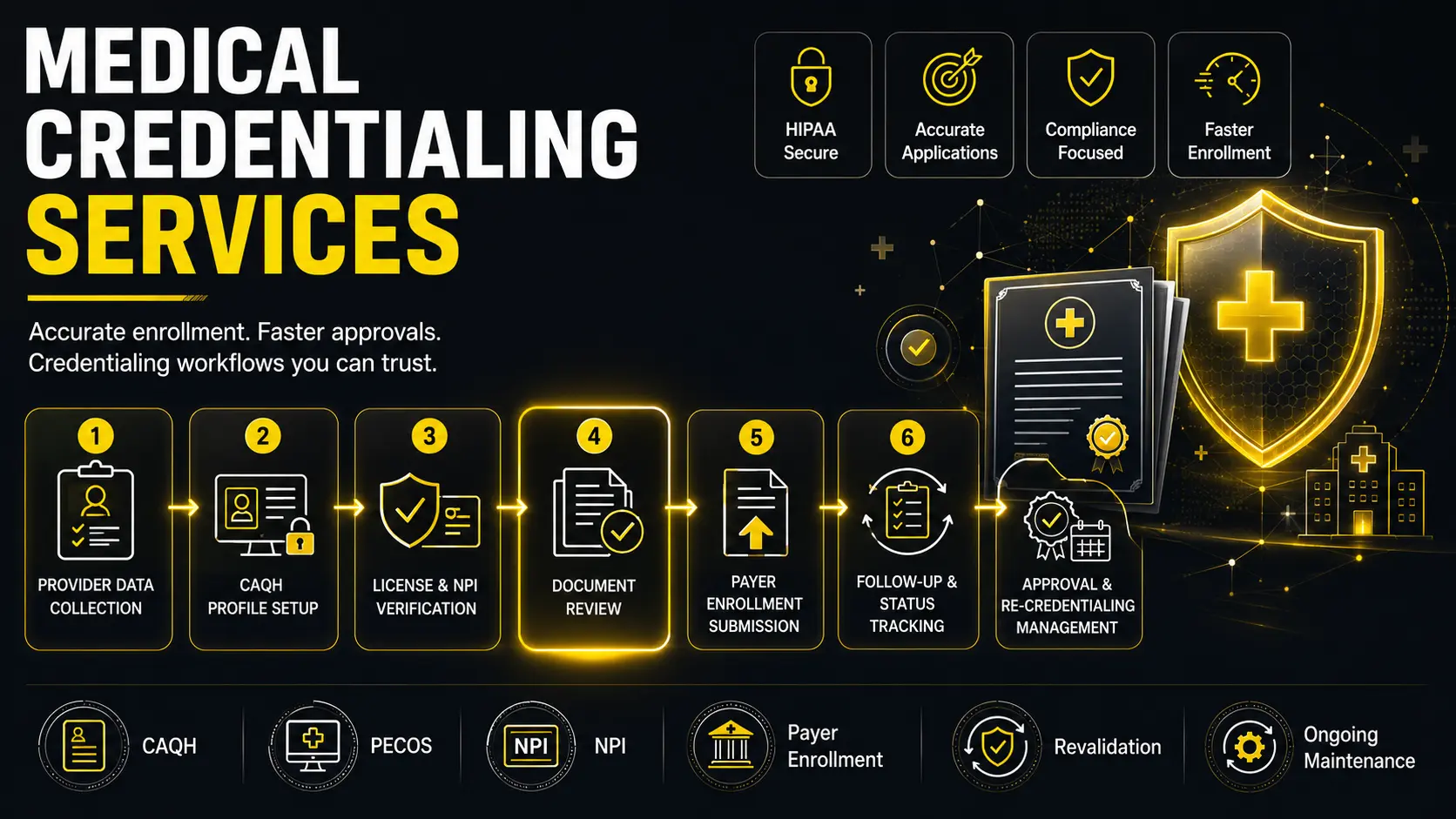
A billing provider in medical billing must match the active payer record. BillifyRCM supports organized setup through its medical credentialing services. Careful enrollment and profile checks protect revenue and reduce repeated work.