

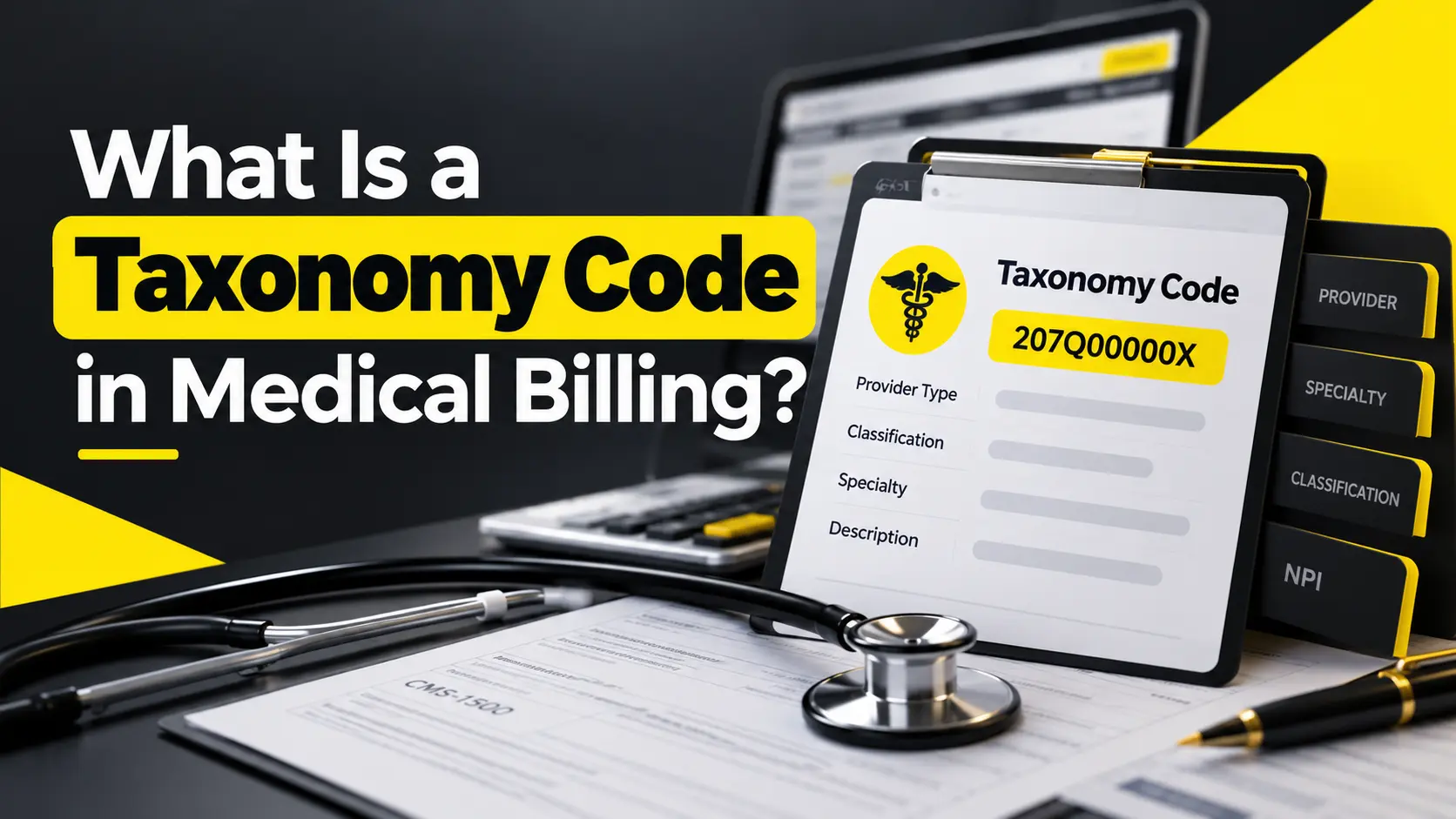
A taxonomy code in medical billing tells insurance companies what type of healthcare provider delivered or billed for a service. The code describes a provider group, field, and area of focus. Payers compare it with the provider NPI, enrollment record, claim details, and contract information.
A wrong or missing code can cause claim rejections, denials, and payment delays. This guide explains how taxonomy codes work, where providers find them, how they connect with NPI records, and how billing teams can prevent common errors.
Table of Contents
ToggleWhat Is a Taxonomy Code in Medical Billing?
A taxonomy code in medical billing is a ten character code that describes the type, classification, or specialty of a healthcare provider. It helps payers understand whether the provider is an individual clinician, a group, a hospital, a laboratory, a supplier, or another healthcare organization.
The code does not replace the NPI. The NPI identifies the provider, while the taxonomy code explains the provider type or specialty. A claim can need both pieces of information so the payer can match the service with the correct provider record.
Why Taxonomy Codes Matter
Insurance companies use taxonomy data during enrollment and claim review. The code helps them check whether the provider can bill for the service under the enrolled specialty. It can also affect network setup, referrals, prior approval, and payment rules.
A valid code alone does not guarantee payment. The code must match the NPI record, payer file, provider role, and service billed. When these details agree, the payer can process the claim with fewer questions.
Who Creates Healthcare Taxonomy Codes?
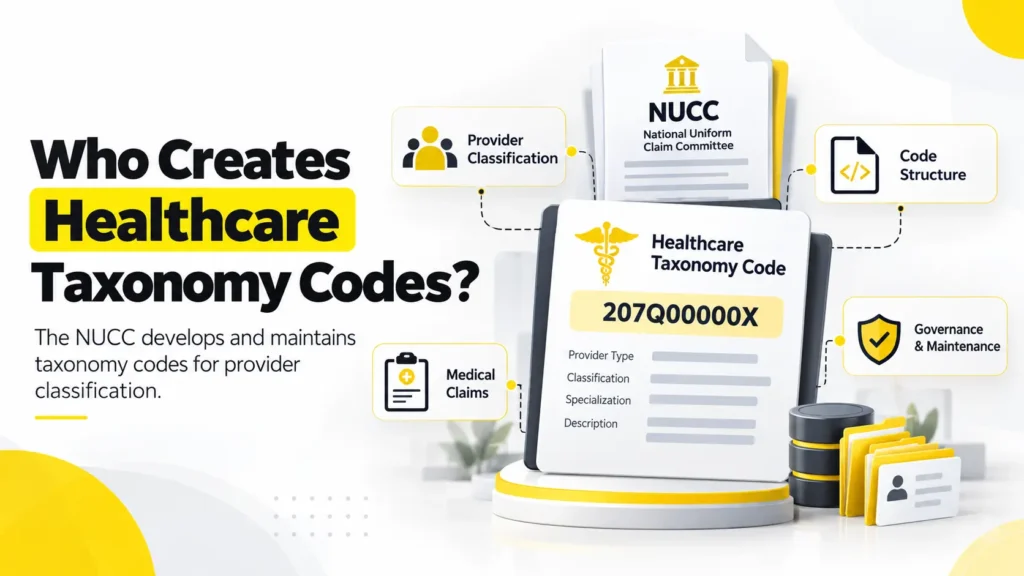
The National Uniform Claim Committee maintains the provider taxonomy code set. The Centers for Medicare and Medicaid Services uses the code set in provider records and gives guidance on finding a code through its official healthcare taxonomy page.
The code set changes over time as provider types and specialties change. Practices should use a current source instead of copying a code from an old form, email, or claim.
How a Taxonomy Code Is Structured
A taxonomy code has ten characters made from numbers and letters. The code follows a clear order that points to a broad provider group, a more specific provider type, and sometimes an area of focus. The final character is often the letter X.
Staff do not need to memorize the structure. They should understand that similar providers can have different codes based on training and services. Choosing the nearest sounding title without checking the official description can create an error.
What Is a Healthcare Provider Taxonomy Code?
A healthcare provider taxonomy code describes the role or specialty a provider reports in the national provider record. It may identify a family medicine doctor, physical therapist, clinical social worker, pharmacy, clinic, hospital, or another provider type.
A provider can report more than one code when the provider has more than one valid specialty. One code must serve as the primary code. The primary choice should reflect the main practice and match payer enrollment.
Taxonomy Code and NPI Differences
An NPI is a unique number that identifies a person or organization. A taxonomy code describes what that person or organization does. Two providers can share the same taxonomy code, but they cannot share the same individual NPI.
Claims often use both values. The payer reads the NPI to locate the provider and then checks the taxonomy to confirm the provider type. A correct NPI with the wrong specialty code can still create a claim problem.
How an NPI Taxonomy Code Works
An NPI taxonomy code appears in the provider record connected to an NPI. Providers select taxonomy information when they apply for an NPI and can update it when their role or specialty changes. The public NPI record can show all reported codes and the primary choice.
Payer enrollment does not always update when the NPI record changes. A provider may need to notify each payer and complete a separate update. Billing teams should confirm both records before submitting claims.
Individual and Organization Taxonomy Codes
An individual provider chooses codes that describe personal training and services. An organization chooses codes that describe the healthcare entity. A doctor and the medical group that employs the doctor may therefore use different codes on the same claim.
Staff should not copy the rendering provider code into the billing organization record without review. The code must fit the provider that owns the NPI and the role shown on the claim.
Primary and Secondary Taxonomy Codes
A provider with several valid specialties may report several taxonomy codes. The primary code should describe the provider main area of practice. Other codes can describe additional training or services that the provider truly offers.
More codes do not always improve billing. Extra or outdated codes can create confusion. Practices should keep only accurate choices and confirm which code each payer expects for the enrolled service.
How to Perform a Taxonomy Code Lookup
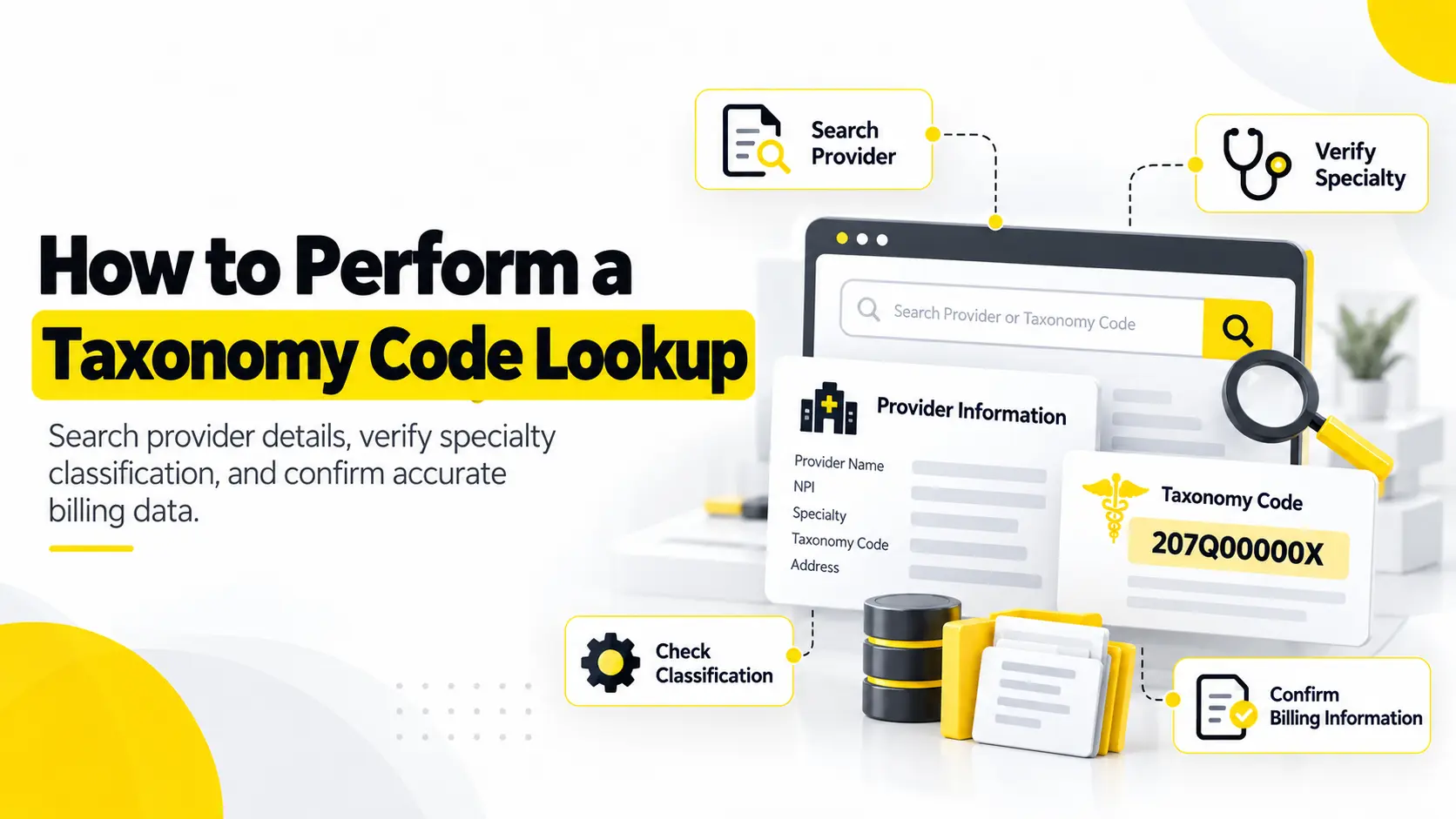
A taxonomy code lookup starts with the provider type and specialty. Staff can search the current code set and read the full description before making a choice. They should then compare the result with the provider license, training, NPI record, and payer enrollment.
Do not choose a code only because another practice uses it. Similar businesses may have different legal structures, clinicians, and services. The selected code must describe the actual provider connected to the claim.
How to Find a Taxonomy Code by NPI
The public NPI registry can help staff find taxonomy codes linked to an NPI. Search by the provider name or NPI, then review the listed code, primary status, address, and provider type. Confirm that the result belongs to the correct person or organization.
The registry shows reported NPI information, but it does not prove active payer enrollment. Contact the payer or check the enrollment record when a claim rejects because of a taxonomy mismatch.
Where Does a Taxonomy Code on Claim Data Appear?
A taxonomy code on claim data can describe the billing provider, rendering provider, or another provider role. The exact location depends on the claim format, provider type, and payer rule. Electronic professional claims commonly carry the code with the related provider information.
Billing software may fill the field automatically from the provider profile. Staff should review that setup instead of typing the code on every claim. A setup error can affect many claims before the team notices it.
How Taxonomy Codes Affect Credentialing
Credentialing teams use taxonomy information to describe a provider specialty during payer review. The payer may compare the code with the license, education, board status, services, location, and contract request. A mismatch can delay enrollment or place the provider under the wrong specialty.
Keep NPI, credentialing, enrollment, and billing records consistent. When a provider adds a specialty or stops offering a service, review every connected record rather than changing only the billing system.
Common Taxonomy Code Errors
Common errors include using an old code, selecting the wrong provider type, reporting an organization code for an individual, or sending a specialty that the payer did not enroll. A practice may also use the primary code for every service even when another enrolled code fits the claim.
Another common problem is inconsistent data. The claim, NPI record, and payer file may each show a different code. Staff should compare all three records when a rejection or denial mentions provider specialty.
Can a Wrong Taxonomy Code Cause a Denial?
Yes. A payer may reject or deny a claim when the taxonomy code does not match the NPI, provider role, enrollment file, specialty, or billed service. Some payers reject the claim before review, while others deny it after checking coverage and payment rules.
Read the payer message carefully. Correct the claim only after confirming the right code and enrollment status. Repeated resubmission with another guessed code can waste time and may create duplicate claim issues.
How to Correct a Taxonomy Code Problem
Start with the claim response and identify which provider caused the mismatch. Check the NPI registry, billing profile, payer enrollment, service location, and claim role. Correct the source record so future claims use the right value.
If payer enrollment is wrong, a corrected claim may not solve the issue. Complete the payer update first and ask when the change becomes active. Keep confirmation details and review claims during the update period.
When to Update a Taxonomy Code
Review taxonomy data when a provider gains a specialty, changes the main practice area, joins a new organization, opens a location, or receives a related claim error. Also include taxonomy checks in regular provider record reviews.
An updated NPI record does not automatically update every payer. Notify payers, clearinghouses, and billing systems as required. Use the same effective date and supporting details across records.
How Accurate Taxonomy Data Supports Clean Claims
Accurate taxonomy data helps the payer connect the provider, specialty, service, and enrollment record. This lowers avoidable rejections and gives staff a clearer path when a claim needs follow up. It also supports smoother credentialing and network setup.
BillifyRCM helps practices manage provider records through organized medical credentialing services and revenue cycle support. Regular checks can stop one setup error from affecting many claims.
Why Correct Taxonomy Information Matters
A taxonomy code in medical billing gives payers a standard way to understand a provider type and specialty. The code works with the NPI and payer enrollment record, so all three must stay accurate and consistent.
Choose codes from a current source, use the right code for each provider role, and review records when services change. Careful setup protects clean claims, reduces payment delays, and helps the practice avoid repeated billing work.