
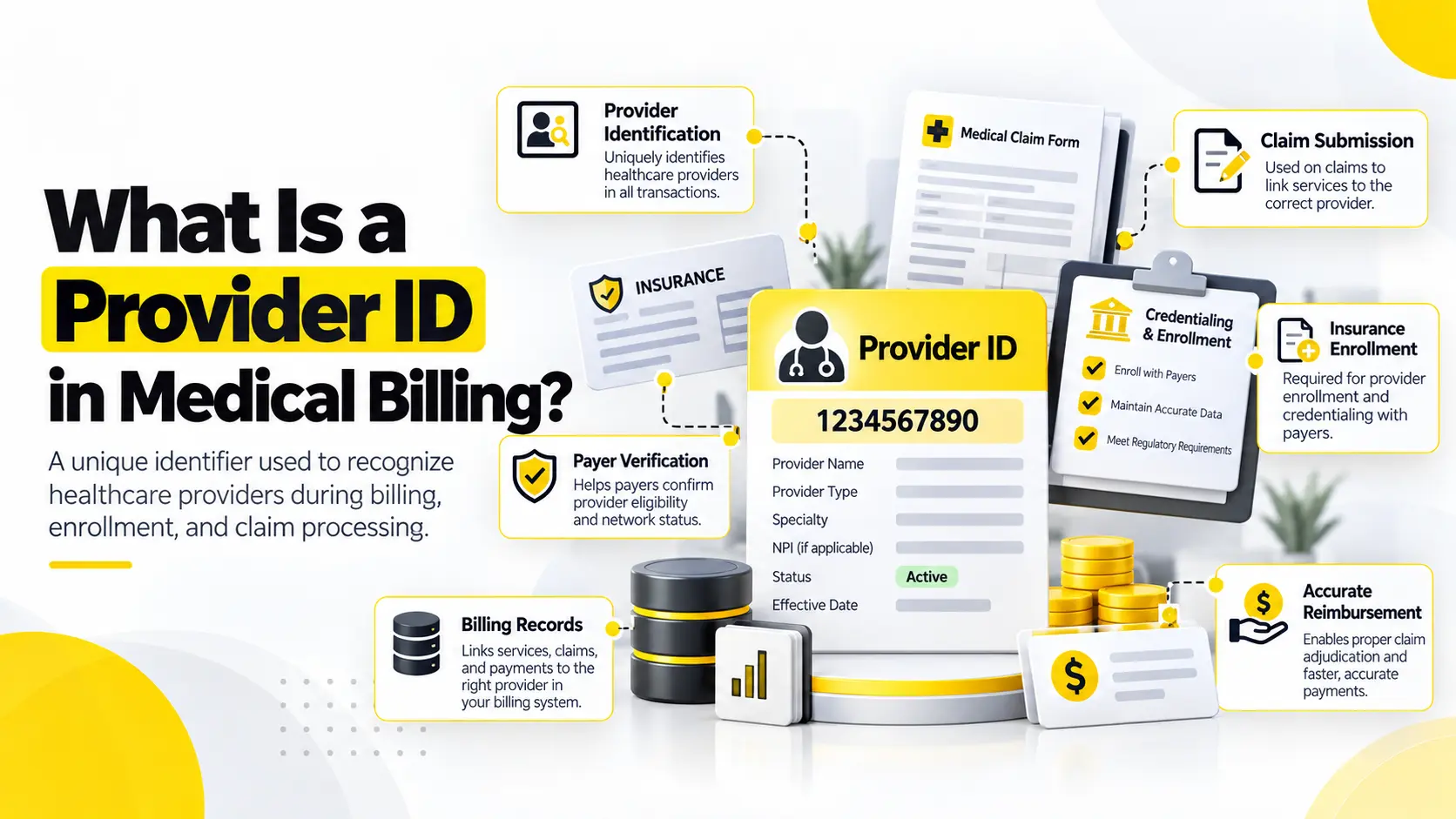
A provider ID in medical billing helps an insurance company identify the healthcare professional or organization connected to a claim. The term can refer to an NPI, a payer assigned number, or another number used in a specific health plan. The meaning depends on who issued the number and where it appears.
Using the correct ID helps the payer match the claim with enrollment, contract, specialty, location, and payment records. This guide explains the main types of provider IDs, where to find them, how they differ, and how billing teams can prevent simple errors that delay payment.
Table of Contents
ToggleWhat Is a Provider ID in Medical Billing?
A provider ID in medical billing is a number or code that identifies a doctor, clinician, group, facility, laboratory, supplier, or other healthcare provider. Insurance companies use it to connect a claim with the correct provider record. The number can identify the person who performed the service or the organization that submitted the bill.
Provider ID is a broad term. It does not always name one national number. In one system, it may mean the National Provider Identifier. In another, it may mean a number created by a private insurer, Medicare, or Medicaid. Staff should confirm the number type before they enter it on a claim.
Why Provider Identification Matters
A payer needs to know who delivered the care and who should receive payment. Provider identification helps the payer review enrollment, network status, covered services, contract rates, and claim history. It also helps the payer send notices and payment details to the right practice.
A correct number supports clean claim processing, but it does not work alone. The provider name, address, specialty, tax information, service location, and claim role must also match the payer file. One wrong detail can break the match and cause a rejection or denial.
Main Types of Provider IDs
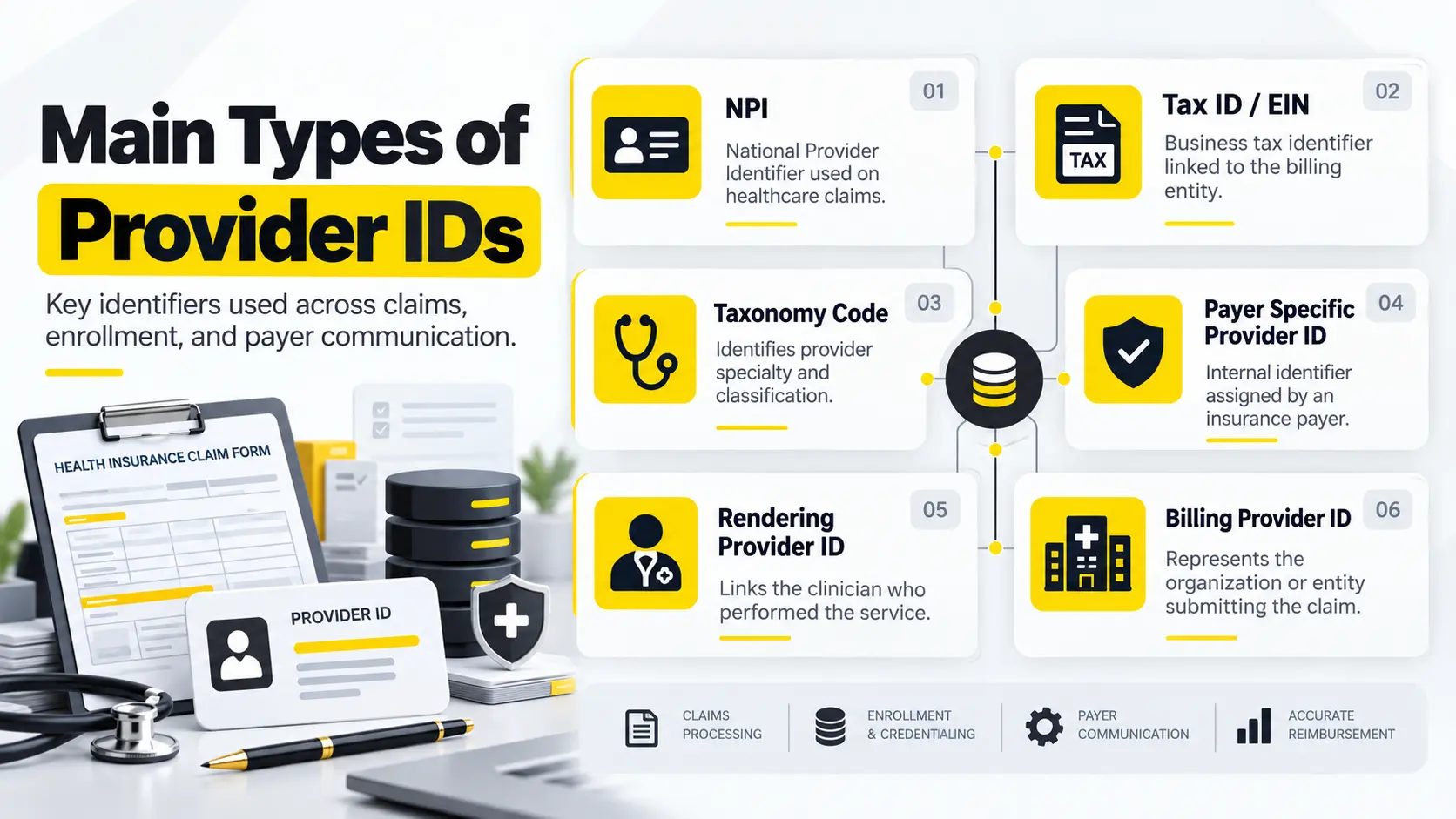
Healthcare providers may have several identification numbers because different programs and insurers keep separate records. A practice might use one national number across standard transactions while also keeping a unique number for each payer. Some numbers identify individuals, while others identify organizations or locations.
Billing staff should label each number clearly. They should record who issued it, which provider and location it covers, and when it became active. This record prevents staff from choosing the wrong number.
National Provider Identifier
The National Provider Identifier, often called an NPI, is a ten digit number used to identify covered healthcare providers in standard electronic transactions. It stays with the provider even when the provider changes a job, address, or health plan. Individual providers receive a Type 1 NPI, while organizations receive a Type 2 NPI.
The official NPI Registry lets staff search public NPI records. The registry can confirm a provider name, address, taxonomy information, and NPI type. It does not confirm that the provider has active enrollment with every insurance company.
Payer Assigned Provider Number
A private insurance company may create its own number after it enrolls or contracts with a provider. The payer uses that number inside its own system. Another insurer may assign a different number to the same provider, group, or location.
A payer number may appear in a welcome letter, contract record, online portal, payment notice, or call reference. Practices should not assume that this number replaces the NPI on a standard claim. They should follow the payer instructions for each field and transaction.
Medicare and Medicaid Provider Numbers
Medicare and state Medicaid programs can use program specific enrollment numbers in addition to the NPI. These numbers connect the provider with the program enrollment record. They may vary by provider type, state, location, or program.
A provider can have a valid NPI but still lack active enrollment in a public program. Billing teams should check the program record before submitting claims. They should also watch effective dates because an approval date and a billing date may not be the same.
Provider ID Meaning
The provider id meaning depends on the document or system in front of you. The label may point to an NPI, an insurer number, or a program enrollment number. Review the payer guide or ask which identifier it expects.
Before entering a value, confirm the provider role, payer, claim type, and location. Then compare the number with a trusted enrollment record. This check prevents repeated claim corrections later.
Provider ID vs NPI
The provider id vs npi question causes confusion because people sometimes use both terms for the same number. An NPI is one specific national identifier. A provider ID is a wider label that can include an NPI or a number assigned by a payer or government program.
Ask who issued the number. If the national NPI system issued it, the number is an NPI. If an insurer created it after enrollment, it is usually a payer number. Both may appear in practice records, but they serve different system needs.
Billing Provider ID
The billing provider id identifies the person or organization that submits the claim and expects payment. For a group practice, this is often the organization NPI. A solo professional may bill under an individual NPI, depending on the business and payer enrollment.
The billing provider must match the tax information and enrollment record used for payment. If the claim names the right clinician but the wrong billing organization, the payer may reject it, apply the wrong contract, or send payment to the wrong record.
Rendering Provider
The rendering provider is the clinician who performed or directly supervised the service. A group claim often shows the group as the billing provider and the clinician as the rendering provider. Each role needs the correct identifier.
Using the group number in the rendering field can hide the person who delivered care. Using the clinician number in the billing field can also cause a mismatch. The practice should map both roles correctly before it sends the first claim.
Referring, Ordering, and Supervising Providers
Some services require information about the provider who referred the patient, ordered an item, or supervised care. The payer may compare that provider number with enrollment and service rules. A missing or invalid number can stop an otherwise correct claim.
Staff should collect this information before claim entry. They should confirm the name and NPI instead of relying on an old record. Clear intake steps reduce corrections after submission.
Where Provider IDs Appear on Claims
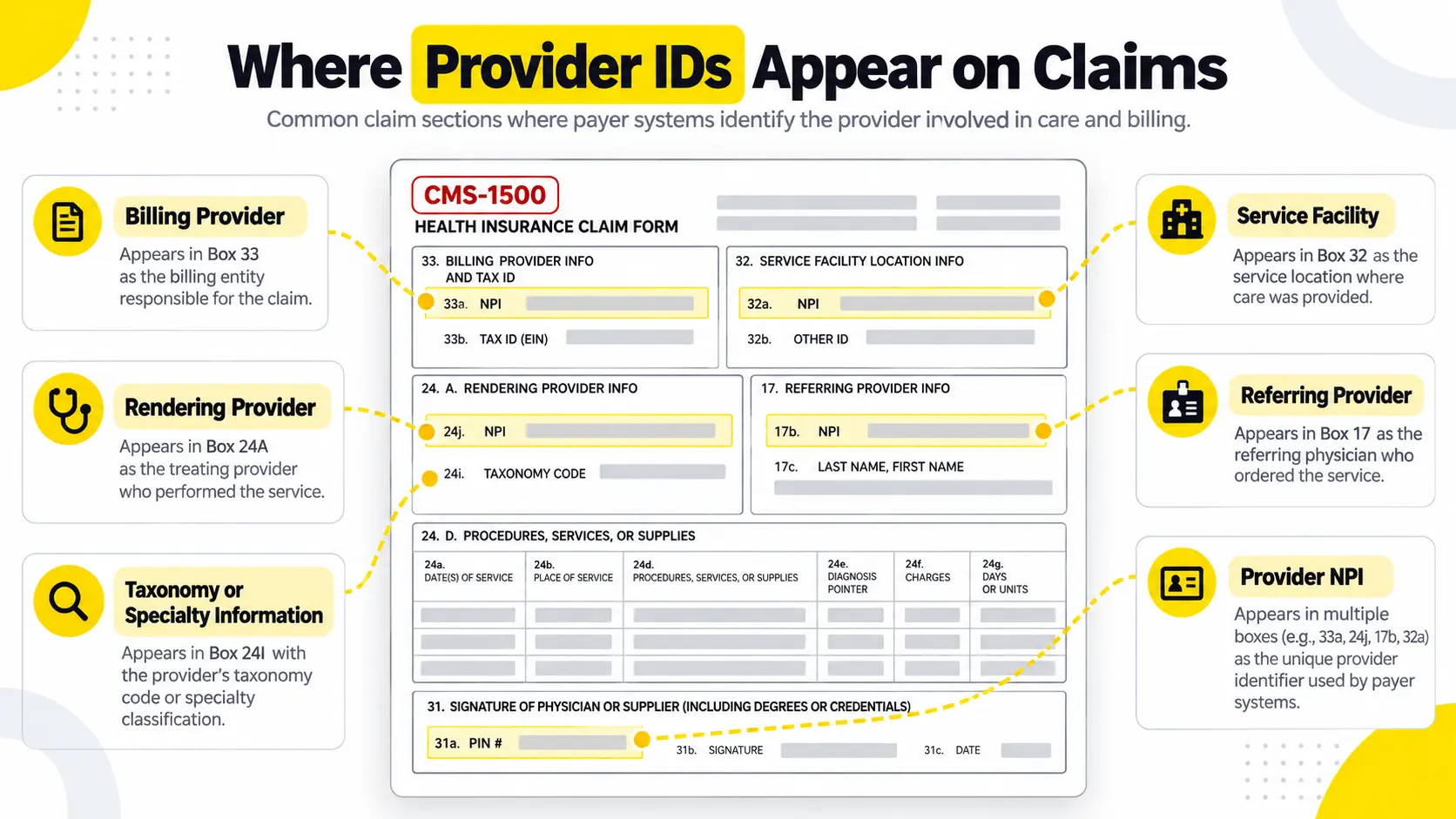
A claim can carry identifiers for the billing, rendering, referring, ordering, supervising, attending, or facility provider. The required roles depend on the service, claim form, payer, and place of care. Not every claim needs every role.
Practice software often fills these fields from provider profiles. That saves time, but it can spread one setup mistake across many claims. Teams should test profiles, review claim files, and confirm that each number appears under the correct provider role.
Provider ID Lookup
A provider id lookup should begin with the number type. Use the public registry for an NPI. Use the insurer portal, enrollment letter, contract file, or provider service line for a payer number. Use the proper government program record for Medicare or Medicaid information.
Match more than the name. Confirm the address, organization, provider type, and location because many people and businesses have similar names. Keep a note of the source and date so another team member can repeat the check later.
How to Verify a Provider Number
Start by asking which provider, payer, location, and claim role the number should represent. Next, compare it with the current enrollment or registry record. Check the exact spelling of the provider name and review the effective date.
If the information does not match, contact the payer or enrollment team. Save the call reference and expected completion date. This record helps the team manage affected claims.
How Enrollment Affects Provider IDs
An identification number proves identity inside a system, but it does not prove active enrollment or a contract. The provider may remain outside the network or inactive for the service date.
When a provider joins a practice, opens a location, changes ownership, or adds a service, the practice may need an enrollment update. Claims sent before the payer activates the change can fail even when every number on the claim is accurate.
Common Provider ID Errors
Common errors include using an organization NPI for an individual, placing a rendering number in the billing field, choosing an old payer number, or sending a number tied to another location. A simple typing error can also create an invalid provider message.
Another frequent problem appears when the practice updates one system but not the others. The registry, payer enrollment, billing software, and clearinghouse may show different details. Regular comparison keeps these records aligned.
How to Fix a Provider ID Claim Error
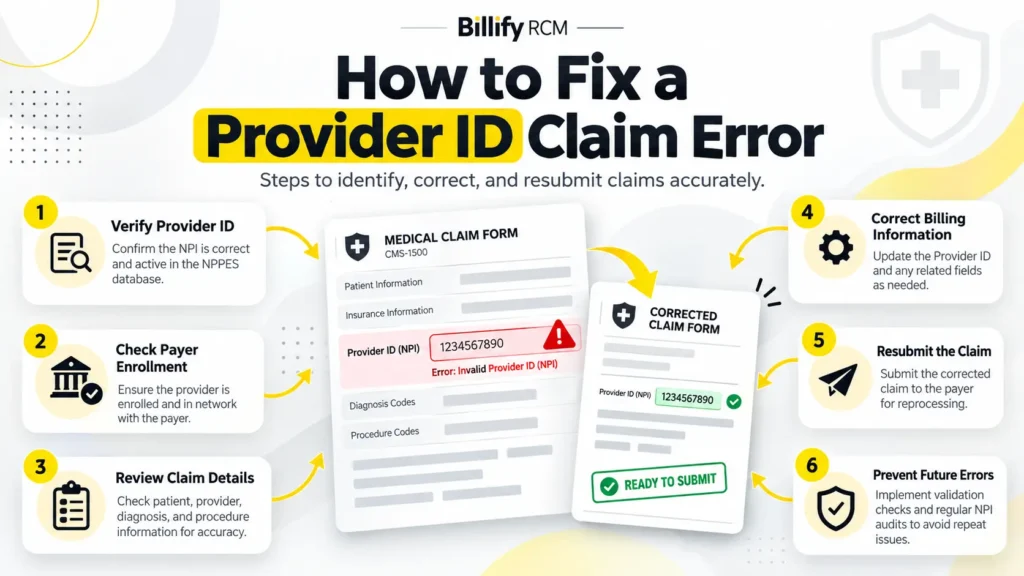
Read the rejection or denial message first. Identify the provider role and field named in the response. Then compare the submitted claim with the payer record, practice profile, and source document. Correct the cause before sending the claim again.
If enrollment is inactive or wrong, a corrected claim may fail again. Complete the enrollment change and confirm its effective date. Ask the payer whether to resubmit, send a corrected claim, or file an appeal after the record becomes active.
How Accurate IDs Support Clean Claims
Accurate provider data helps payers connect each service with the right professional, group, location, and contract. It reduces avoidable rejections and gives staff a clear starting point when a claim needs review. Good setup also improves reports because payments stay linked to the correct records.
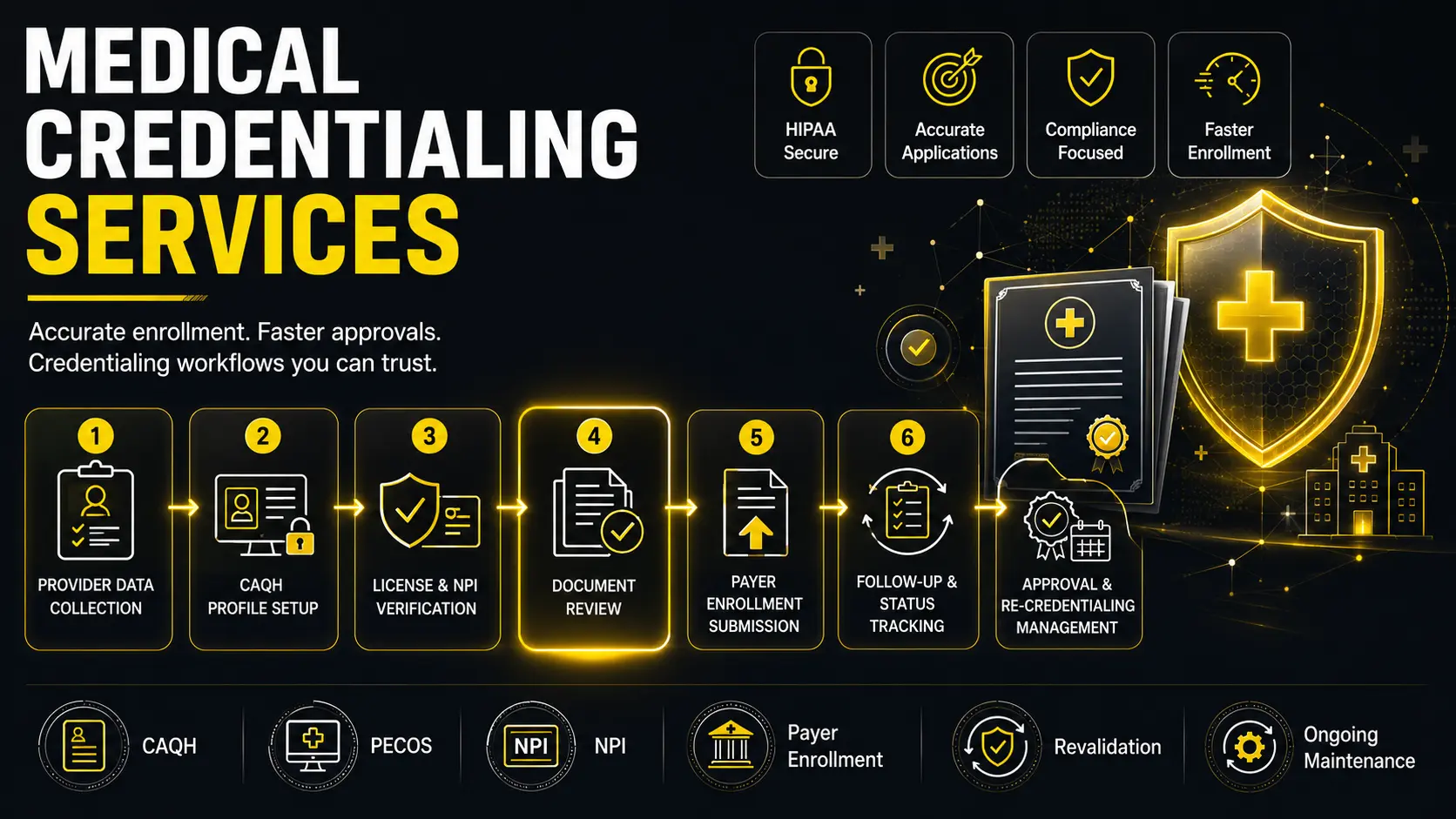
BillifyRCM supports organized provider setup through its medical credentialing services. A consistent process for enrollment, profile updates, and claim review can protect revenue and reduce repeated work for practice staff.
Keeping Provider Information Accurate
A provider ID in medical billing only works well when the related records stay current. Review provider information when someone joins or leaves, a location opens, an address changes, ownership changes, or a new service begins. Do not wait for a large group of claims to fail.
Create one trusted record for every provider and location. Give staff clear responsibility for updates and keep proof from each payer. Careful identification supports faster claim processing, cleaner follow up, and more reliable payment for the practice.