
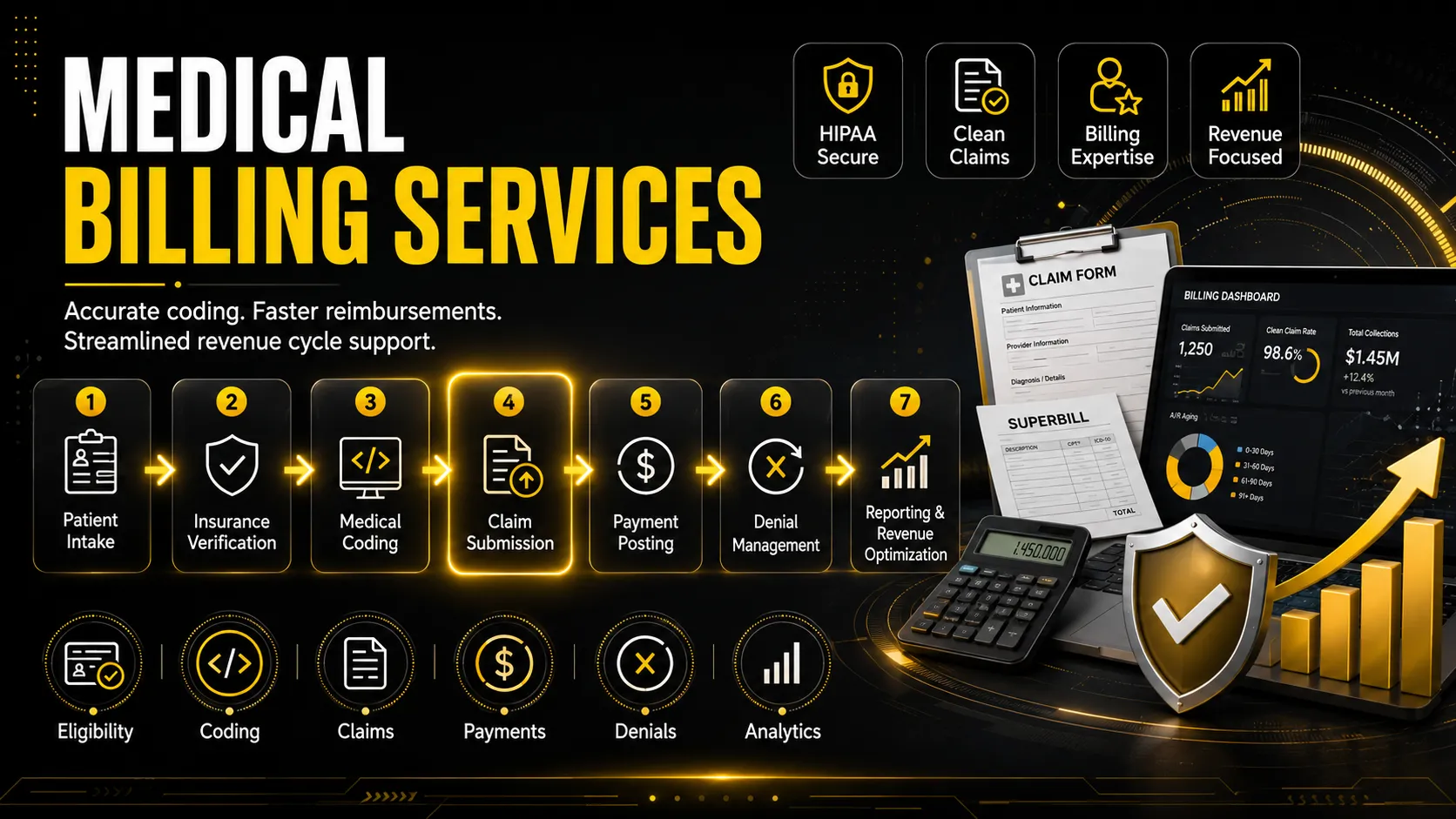
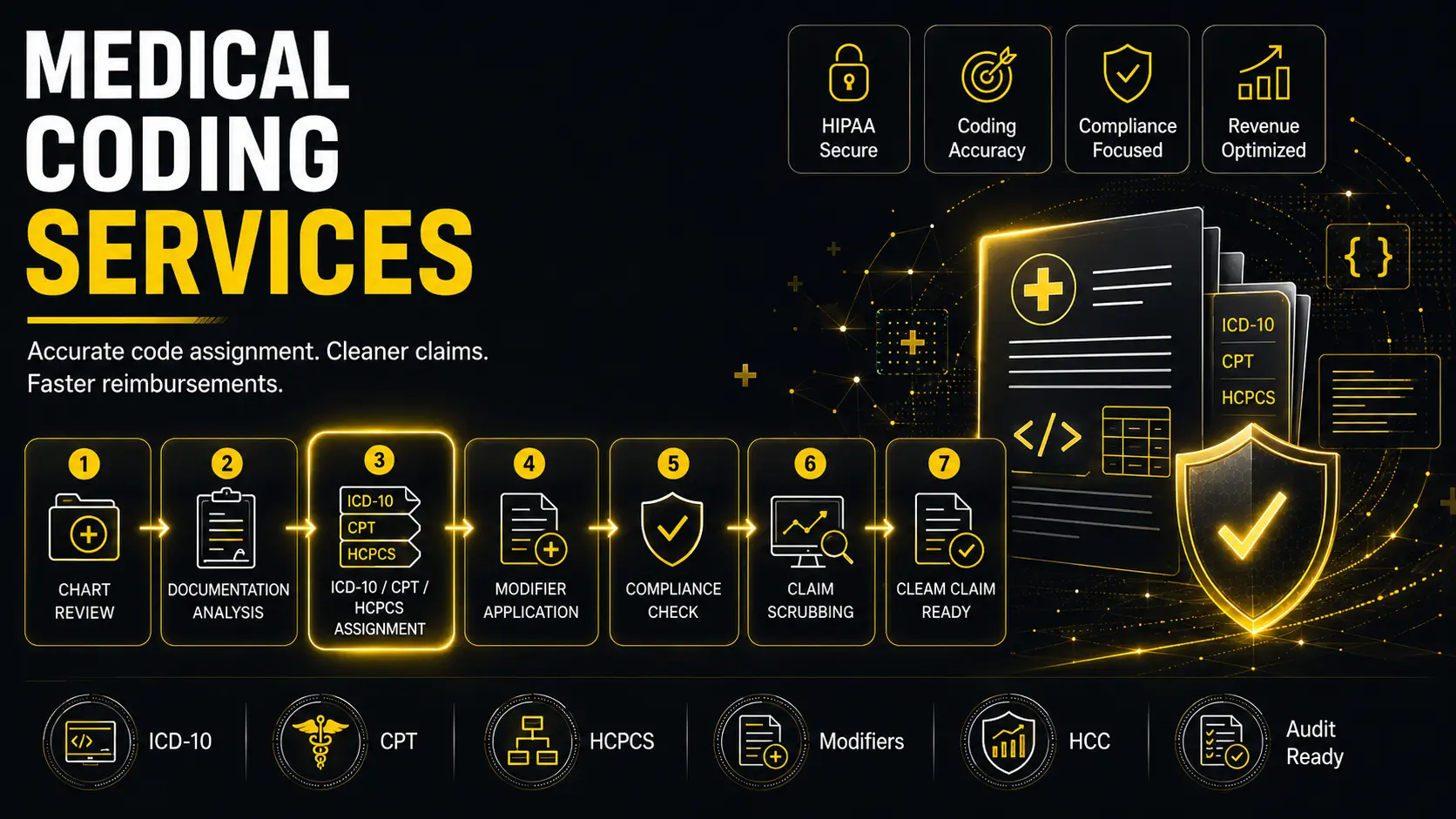
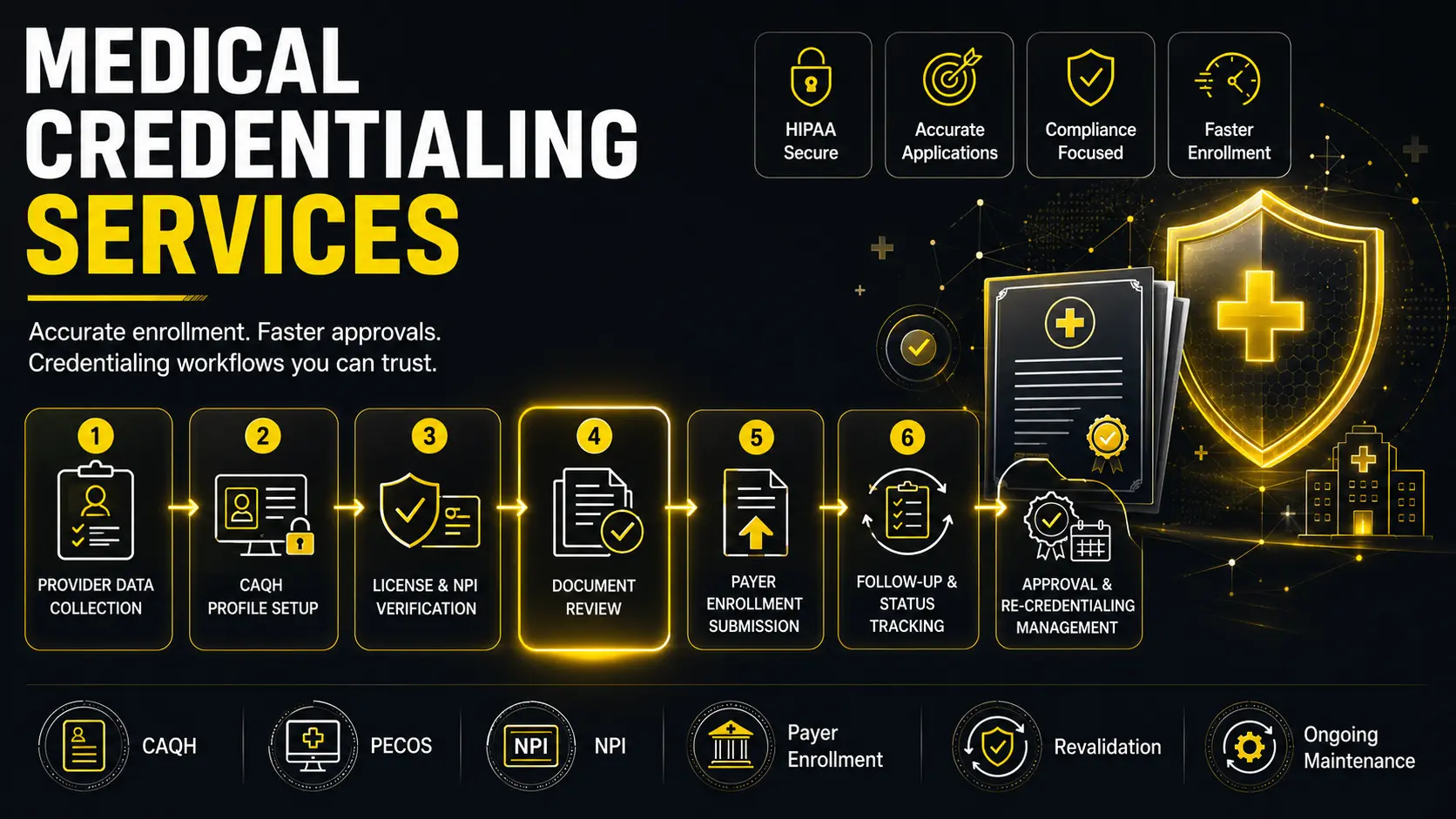
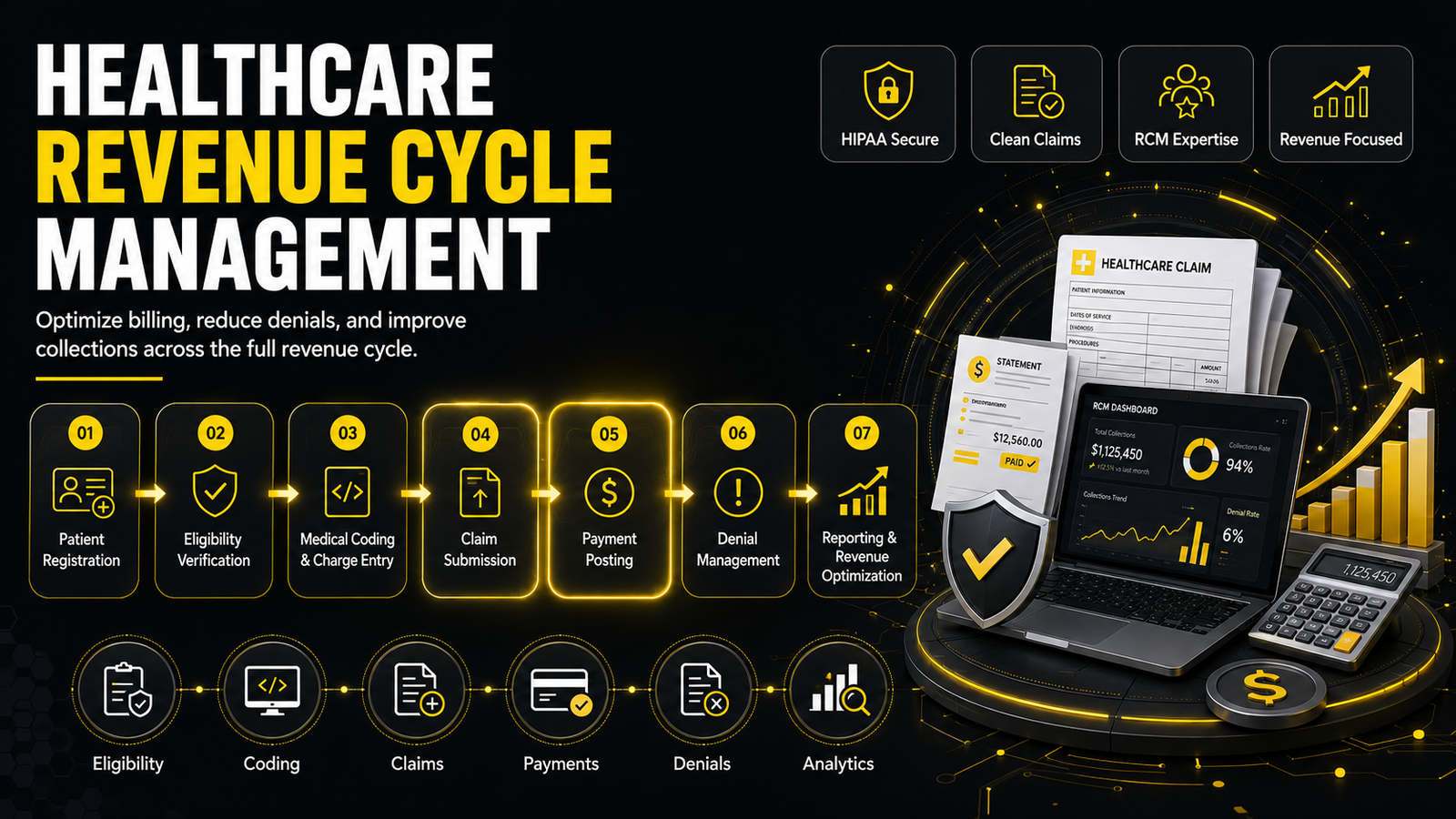
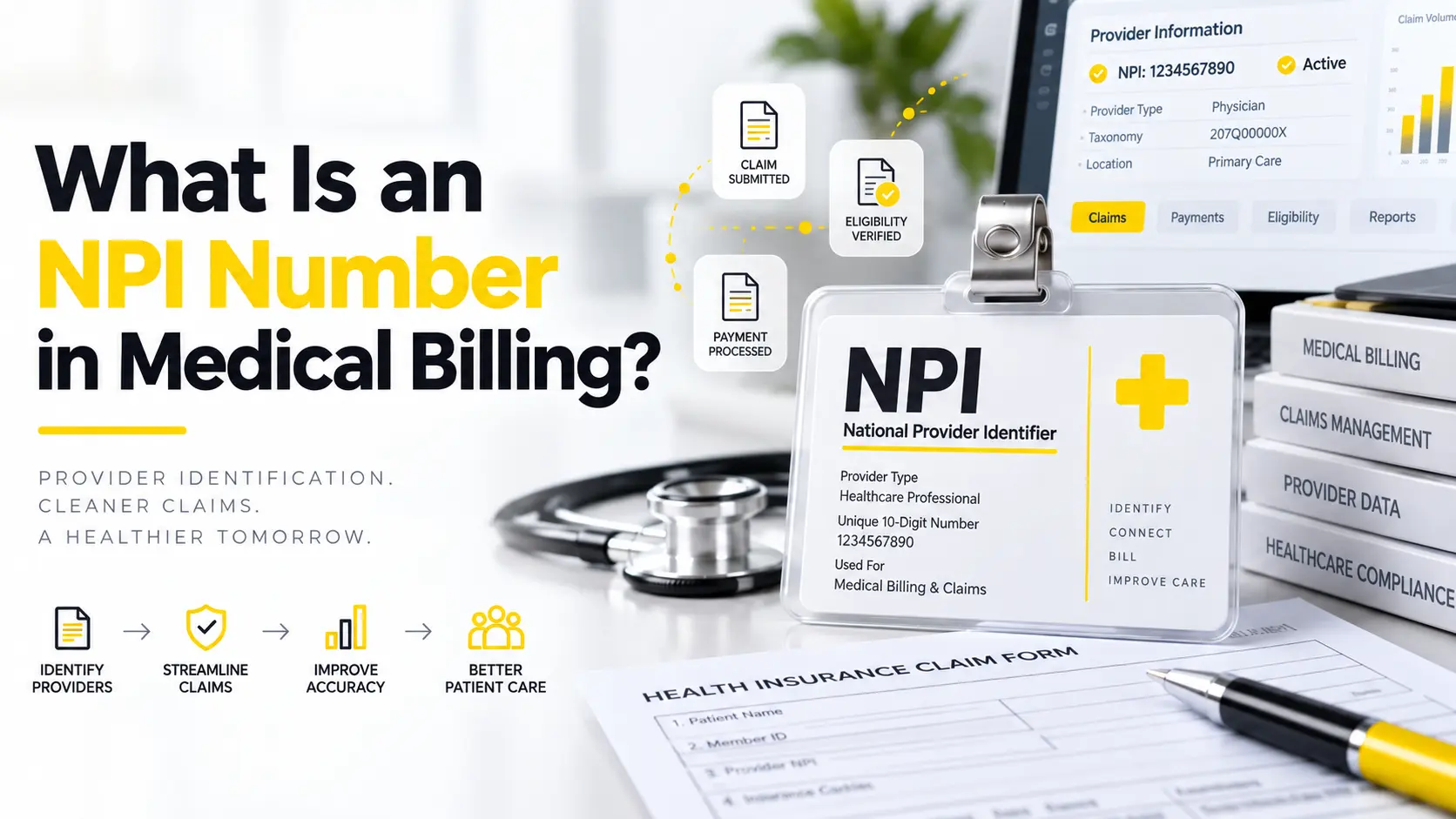
An NPI number in medical billing helps insurance companies identify the healthcare provider connected to a claim. A claim may include the doctor who treated the patient, the group that sent the bill, and another provider who ordered or referred the service. Each role needs clear and correct provider details.
A wrong or missing NPI can delay payment, cause a rejection, or create a credentialing problem. This guide explains what an NPI is, who needs one, how providers get it, where it appears on claims, and how practices can avoid common NPI errors.
Table of Contents
ToggleWhat Is an NPI Number in Medical Billing?
An NPI number in medical billing is a unique ten digit number that identifies a healthcare provider in standard healthcare transactions. NPI means National Provider Identifier. Doctors, nurses, therapists, medical groups, hospitals, laboratories, and many other healthcare providers may use this number.
The number stays with the provider. It does not change when an individual provider changes jobs, moves to another state, or works with a different insurance company. The NPI identifies the provider, but it does not show whether the payer has approved that provider for its network.
Why the NPI Number Matters
Payers use the NPI to connect a claim with the right provider record. The number helps them check the provider name, role, specialty, billing relationship, and enrollment information. It also gives healthcare organizations one standard way to identify providers instead of using a different number for every transaction.
Correct NPI data supports clean claims and faster payment. Incorrect data can lead to claim rejections, denials, payment delays, or requests for more information. Practices should treat the NPI as a key part of billing setup, not as a simple number that staff enter once.
Who Issues NPI Numbers?
The Centers for Medicare and Medicaid Services manages the NPI system through the National Plan and Provider Enumeration System. Providers can apply through the official NPPES website. The system reviews the application and assigns the number.
Getting an NPI does not enroll a provider with Medicare, Medicaid, or a private insurance plan. It also does not give the provider a license. Credentialing, payer enrollment, and state licensing remain separate steps.
Who Needs an NPI Number?
Healthcare providers covered by HIPAA usually need an NPI when they send standard electronic transactions. Individual clinicians can need one, and healthcare organizations can need one. Examples include physicians, nurse practitioners, therapists, dentists, pharmacies, clinics, hospitals, laboratories, and medical equipment suppliers.
A provider should review its legal structure and billing role before applying. An individual clinician and the organization where that clinician works may each need a different NPI. Using the wrong type can create problems on claims and payer applications.
What Is a Type 1 NPI?
A Type 1 NPI belongs to an individual healthcare provider. A doctor, therapist, dentist, nurse practitioner, or another eligible clinician may receive this type. The individual keeps the same NPI throughout a career, even after changing an employer or practice location.
A sole owner may bill under an individual setup in some cases, but the correct structure depends on payer rules and the legal business setup. Providers should match the NPI type with enrollment and claim information.
What Is a Type 2 NPI?
A Type 2 NPI belongs to an organization. Medical groups, hospitals, clinics, laboratories, pharmacies, and other healthcare businesses may use this type. An organization with separate locations or parts may need more than one Type 2 NPI when those parts bill as distinct healthcare providers.
The legal name, tax information, location, and payer enrollment should support the organization record. A mismatch between the organization NPI and payer file can stop an otherwise correct claim.
Individual NPI and Group NPI Differences
An individual NPI identifies the clinician who provided or ordered care. A group NPI identifies the organization that bills for services. A claim may show both numbers because the payer needs to know who performed the service and which business expects payment.
Staff should not replace one with the other. They should follow the claim form rules and the payer enrollment record. The billing system should connect every clinician to the correct group and service location.
NPI Number and Payer Provider ID
An NPI is a national identifier. A payer provider ID is a number that a specific insurance company may assign after enrollment. These numbers do not mean the same thing. A provider may have one NPI but several payer IDs.
Billing staff should save both values in the right system fields. Entering a payer ID where the claim expects an NPI can cause a rejection. The team should also keep enrollment letters so it can confirm which numbers belong to each payer and location.
How Payers Use the NPI on Claims
The payer reads the NPI and compares it with enrollment records. It may check the provider name, specialty, location, tax details, network status, and link with the billing organization. If those records do not match, the payer may stop the claim before full processing.
An accepted claim can still face a later denial if the provider was not enrolled for the service date or location. A clean claim therefore needs both a valid NPI and a correct payer record.
Billing, Rendering, Ordering, and Referring Providers
The billing provider is the person or organization asking for payment. The rendering provider performed the service. An ordering provider requested an item or service, while a referring provider directed the patient to another provider. One claim can include several of these roles.
Each NPI must appear in the correct place. Staff should not copy the billing NPI into every provider field. They should use the medical record, order, referral, and payer rules to choose the right provider for each role.
How to Find a Provider NPI Number
A provider NPI number can be found through the public NPI database. Searchers can use a provider name, organization name, location, or specialty. Because some names are similar, staff should confirm more than the number before using the result.
Check the full legal name, practice address, taxonomy, and record status. The public result may not prove that the provider participates with a payer. Staff should confirm payer enrollment separately before billing.
How to Apply for an NPI Number
Providers who want to know how to apply for an NPI number can use the NPPES online application or another allowed method. The applicant enters identity or organization details, practice information, contact details, taxonomy, and license information when required.
Review every field before submission. Use the legal name that matches official records and select the correct provider type. Save the confirmation and keep access details secure. An employer or trusted representative may help, but the provider should know who controls the account.
How to Use an NPI Registry Lookup
An NPI registry lookup helps a practice confirm public provider information before claim submission or enrollment work. It can show the NPI, provider name, address, taxonomy, and record status. This check can catch typing errors and old details.
Do not rely on the search result as the only source. Compare it with the provider file, license, contract, and payer enrollment. A correct public record does not guarantee that every payer has the same current information.
Why NPI Verification Matters
NPI verification means checking that the number belongs to the right provider and matches the claim role. A practice should complete this check when it adds a provider, changes a location, updates billing software, or receives an NPI related rejection.
The check should include the legal name, NPI type, taxonomy, address, and payer enrollment link. Regular review reduces errors and helps staff find outdated data before it affects many claims.
Common NPI Errors in Medical Billing
Common errors include a missing NPI, a wrong digit, the wrong NPI type, an inactive provider record, or an NPI placed in the wrong claim field. Claims can also fail when the NPI is valid but the payer has not linked the clinician to the billing group.
Other problems come from an old address, wrong taxonomy, name mismatch, or service date before the enrollment start date. Staff should read the full rejection or denial message and correct the real cause.
How to Update NPI Information
Providers should update the NPPES record when important information changes. This may include a legal name, mailing address, practice location, contact person, taxonomy, or authorized official. The NPI itself usually stays the same for an individual provider.
After updating NPPES, notify payers and other systems as needed. One update does not automatically correct every insurance company record. Keep proof of each change and check claims closely during the update period.
How to Protect NPI Information
An NPI is public, but practices should still protect account access and billing use. Limit access to NPPES login details, review changes, and watch for claims or enrollment activity that the provider did not approve.
Train staff to verify requests before sharing other provider details. A public NPI should not become a reason to share private login, tax, banking, or identity information. Report suspicious activity through the right payer or government channel.
How NPI Management Supports Clean Claims
Good NPI management connects provider records across credentialing, payer enrollment, scheduling, coding, billing, and claim follow up. Every system should use the same correct provider relationship. This helps the payer understand who provided the service and who should receive payment.
BillifyRCM supports practices with organized medical credentialing services and revenue cycle work. Careful setup and regular review can prevent avoidable NPI errors from becoming a large unpaid claim problem.
What Healthcare Practices Should Remember
An NPI number in medical billing gives payers a standard way to identify healthcare providers. The number is simple, but its billing use depends on correct provider roles, current public data, and complete payer enrollment.
Practices should verify every NPI, place it in the correct claim field, and update related records when provider details change. These steps protect clean claims, reduce delays, and help the practice receive the payment it earned.